Synergy 8 is an interdisciplinary, non-departmentalized, non-graded, community-issues, problem-solving course for 8th graders at The Westminster Schools. Jill Gough and I co-created the course, and we co-facilitate it, as well. This morning, I posted a summary of our engagement in the “KP Challenge.” Today, we initiated the process of Game Planning – creating game plans to frame and scaffold just about any project work. Ms. Gough and I captured the beginnings of the game plans in a short, one-minute video:
Interestingly, we are using the same “Game Plan” framework with our adult teacher-leaders in our Junior High School PLCs (professional learning communities).[See an example here.]
The Synergy team is utilizing tools that are employed by the pedagogical leaders in our middle school. I find that parallelism so exciting!
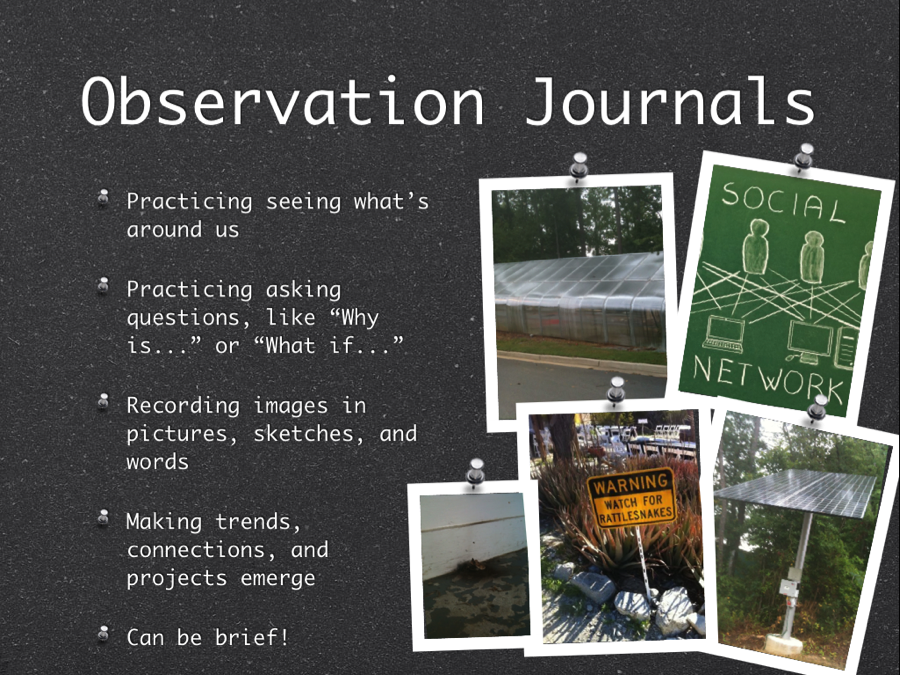
Last week in Synergy 8, our team of 26 established and integrated our triad of foundational course-communication tools – Schoology, Posterous, and WordPress. After all, a learnopolis needs an infrastructure for advanced communication. Additionally, we began utilizing and practicing our #1 tool in Synergy – the observation journal. In the upcoming weeks, our team observations will allow us to develop projects of our choosing that address community needs about which we are curious…and about which we care.
This week, on Monday, August 29, we began Synergy with this short piece:
We wanted to use a compelling hook for enlisting the students in a prototypical project. By engaging this project as an “alpha project” for this semester’s Synergy 8 team, we could “learn by doing” within the context of a project – a project started by last year’s Synergy 8 crew. After watching the video, we coached the team through a process of determining methods and action steps for researching the perceived problem of keeping Malone Dining Hall clean. Based on the team’s gamestorming, we focused on four possible methods: 1) direct observation of Malone, 2) interviews with homerooms regarding KP, 3) interviews with Malone staff and director Robert Nash, 4) student body survey.
On Tuesday, we used Poll Everywhere to explore how we might operationalize our teams. Based on the results, we decided to jump into a “spontaneous lesson plan shift.” If we were playing football…we called an audible. We used the results to walk through eight mediated journal prompts created on the fly. We explored graphical analysis and numeracy, and we examined some misconceptions about what the Poll Everywhere data were telling us. The data revealed some teamwork issues, too, and the team members proposed solutions to the issues. We then implemented a solution and retook the Poll Everywhere survey.
Now, the Synergy 8 team is distributed in sub-teams, and we are working to develop the action steps needed to implement our community problem-solving. Before jumping in too deep, though, we paused to read Dan and Chip Heath’s Switch chapter on “Finding the Bright Spots.” We believe there is so much to learn from the example of Dr. Sternin and the Vietnamese-nutrition project. Now we plan to:
1. Enlist the community as partners in the problem-solving process, instead of swooping in and acting like we have all the answers.
2. Study the bright spots of what’s working and strategize how we can do more of that good stuff.
3. Empower the community to sustain the change needed to improve the situation.
Through this alpha project – the KP Challenge – we are addressing a serious community issue, we are bridging the work begun in Synergy 8 2010-11, and we are modeling a project process that can frame future projects that we undertake in Synergy 8. All the while, we are integrating content and skills that are typically distributed and segregated among various “departments.” We are engaged in a scientific process, we are collecting and analyzing data, we are discussing human psychology and sociology, we are drafting persuasive pieces and developing interview questions and protocols.
As a student for many years, I can remember the general trend of the first day of classes. As a whole, most of my teachers distributed a handout with numerous rules and expectations. We were told what kind of notebook to carry, how to organize it, how much quizzes and tests counted in our averages, what not to do in class, etc.
As a counselor at Camp Sea Gull, we learned that first impressions are powerful. Captain Lloyd used to say that it takes only minutes to form a first impression but days and weeks to change or alter that first impression.
DAY 1
In Synergy, Jill Gough and I wanted to facilitate a careful and thoughtful first impression of what the course would be focused on. Our first class period is only 15 minutes long because of the orientation design of our first days of school. In that quarter hour, we hoped to inspire our 24 teammates – all 8th graders – to know that Synergy was about empowering us to be the change we wish to see in the world. So…we began with Kiran Bir Sethi’s 9 minute TED talk:
In the minutes that remained, we asked the student learners to reflect on why we would begin the course with such a video “act 1.” Several piped up and said, “Because we can do things to make a difference.” “This class is about applying our subjects to making a difference in the world.” “We are just kids, but we can act to change things that we see need changing.”
A successful beginning!
DAY 2
On day 2, we began with the Marshmallow Challenge (see Tom Wujec TED talk). Shortly after the class, we cut this 5 minute video:
The student learners wrote some responses in a mediated journal, and the focus centered on the importance of prototyping and engaging in an iterative process of trial, error, success, improvement, revision, retrial.
Next, we explained that our team would engage in a common practice and habit of observation journaling. To kick off this tool-explanation session, we employed Jonathan Klein’s TED talk:
Students briefly reacted to the power of visual imagery and using images (text, sketch, or picture images) to drum up awareness, reaction, and discussion. This was our jumping off point for beginning the powerful habit of recording our observations in a kind of regular diary about what we see and what causes us to question.
Jill and I then demonstrated a method that we both use to keep our observation journals – a great e-mail based blogging system called Posterous. Jill “postered” an observation journal of me postering” an observation journal: http://jplgough.posterous.com/observations-synergy
Finally, before we had to depart, we provided the students with the private access code to our class Schoology site – our primary means of digital communication and archiving for the Synergy community.
From my seat, it was a great beginning with a team of 26 people full of the “I Can” bug…ready to engage the iterative process of prototyping…so that we can take charge and use our images and voices to make a difference in this world. I still don’t know what kind of binder we should use, but that seems relatively insignificant. And we have weeks to overcome that first impression about notebooks and binders!

 it's about learning