Curiosity and Connections – #edu180atl 11-29-11 cross-posted

Curiosity and Connections

This morning began like most mornings for me. I rise early so that I can read and write, mostly about educational ideas related to the future of schools and schools of the future. I began this practice years ago because I wanted to enhance my own knowledge and understanding so that I might better serve others on this dynamic path of school transformation in the 21st century. My formula is easy: maintain deep curiosity and make strong connections. The catalyst for the reaction, though, demands constant commitment and daily practice. Like I tell my two sons, ages seven and four, “If you want to get better at anything, you must practice.”

So, by 5:30 a.m., the time at which I am drafting this post, I already have two more hours of learning practice under my belt. I have made a field of mental Velcro so that I can be ready for connections of curiosity throughout the day. This Velcro is made of numerous “curiosity-connection hooks and loops” formed by the countless curiosities and connections pursued by others. I am indebted to others for sharing openly. For you see, my morning routine utilizes Kindle, Twitter, Google Reader, and the blog-o-sphere to connect me to curiosities and connections from vast numbers of amateur and professional educators around the world. Every morning, I am fortunate enough to enter the greatest faculty lounge on the planet wearing David Letterman’s Velcro suit!

Today, I feel Velcro-ly grateful for curiosity and connection practice!

_______________________________________________

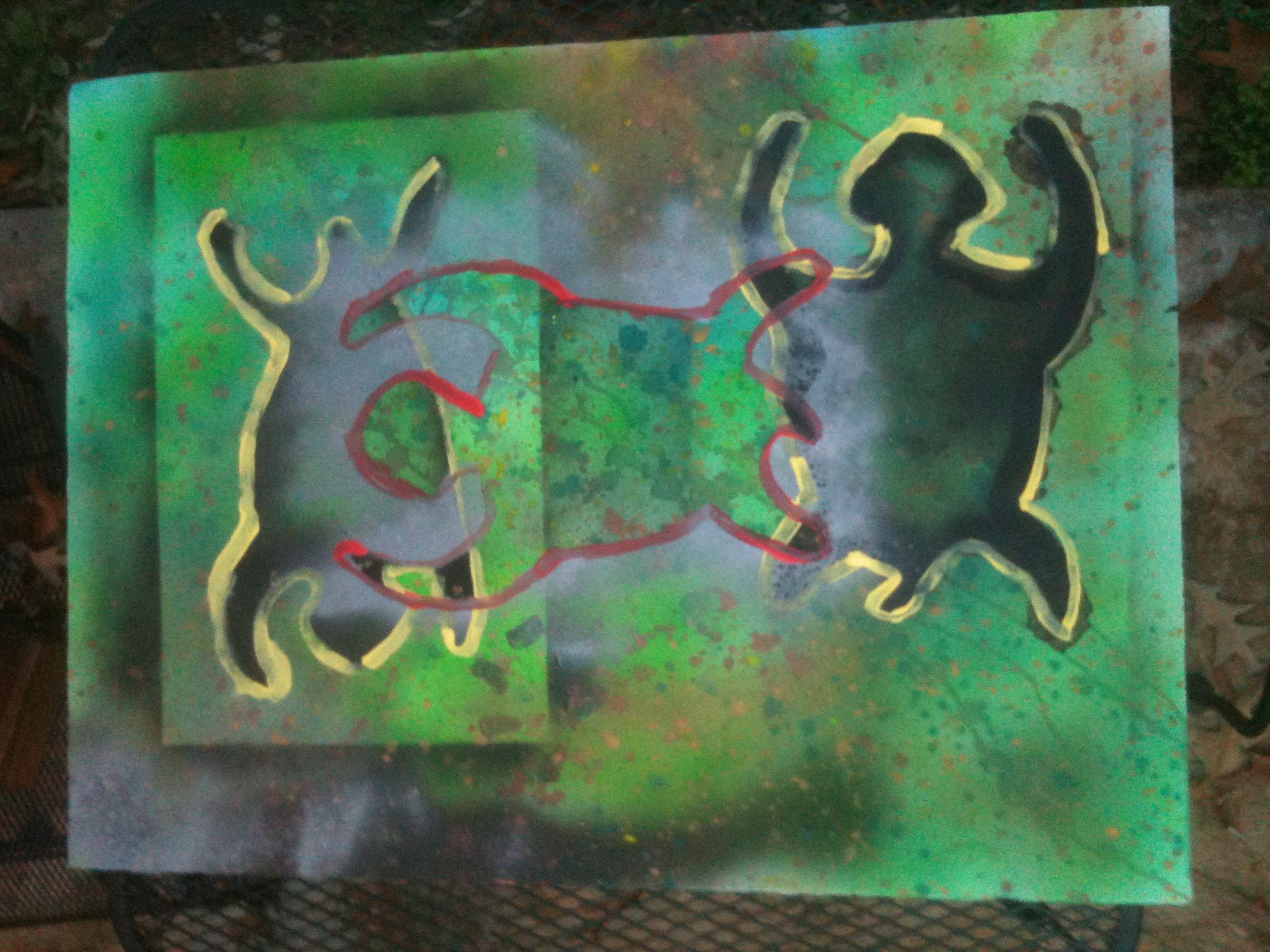
Bo Adams (@boadams1) is a learner first and foremost. Currently, he is the principal learner at The Westminster Schools Junior High School. The photo shows his older son’s recent artwork as he, too, pursues curiosity and connections.

[This post was created and posted originally for edu180atl (http://edu180atl.org/), on Nov. 29, 2011.]

Tear Down Walls and Grow an Open Garden

When we wisely tear down the walls that we can intentionally and unintentionally erect to surround our thinking and understanding, then we can grow our neural and cardio networks in ways that nourish our heads and our hearts. Axons, dendrites, and heartstrings flourish. When we make our mental garden wall-less, we can do amazing things with others…like construct a network of gardens that grow miraculously behind walls all over a city and a world.

What are we reaping and sowing today with our decisions? What walls are we tearing down? What open gardens are we growing? How might we spread our roots and our shoots?

Plant a seed. Provide water and open up to let the light in. Help grow those seeds planted by others. And let others in to fertilize the seeds that you are planting.

It’s about learning…it’s about growth!

Connecting Ideas – Action, Traction, Reaction

In Synergy, a non-departmentalized, non-graded, transdisciplinary, community-issues-problem-solving course, we use blogging as a means to communicate and collaborate on ideas as well as to reflect and to revise thinking.

Currently we offer our learners an Action-Traction-Reaction prompt to spur their thinking, reflection, and writing.

One of our learners offers this reflection that connects his thinking about his team’s project with the ideas from Jamie Oliver’s TED Prize Wish:

Relating Jamie Oliver’s Prize Wish to my Project

Posted on November 17, 2011
.

Jamie Oliver, a celebrity chef, wished to educate every child about food as a use of his TED prize. I’ve known about his fight against obesity and eating right since learning about his TV show in 6th grade, so this wish makes sense to me. He’s creating a

Strong, sustainable movement

to educate every child about food.

The core of this action is to create a movement. This core action could be applied to my project, because in my project we are trying to get people to clean up after themselves, and stop cutting in line. Both of those problems are just bad examples that people have seen and copied. Creating a movement would create new standards in the community for cleanliness in the lunchroom, and could reverse the bad examples in place there.

For Jamie’s wish, he wants to create an online community and also a movement. He said

The grassroots movement must also challenge corporate America to support meaningful programs that will change the culture of junk food.

I didn’t know what a grassroots movement is, so I looked it up. I came up with this. “A grassroots movement (often referenced in the context of a political movement) is one driven by the politics of a community. The term implies that the creation of the movement and the group supporting it are natural and spontaneous, highlighting the differences between this and a movement that is orchestrated by traditional power structures.”

For Jamie’s project, he is relying on creating a following, that would create the foundation for his project and help spread the message. But he also would like to create traveling kitchens and a traveling food theater to make his project entertaining and interactive. From my perspective, the traction for this project is based on two components: people and interaction. This is a good formula for other projects who are looking to gain traction in a community. You draw the people in with interaction, and then rely on them to feel passionate and spread the word.

In the comment section of the article, many people were eager to partner with Jamie’s project to support and help organize his ideas. I think that the biggest way to attract reaction like this, is to be backed by TED! But the other large factor is that he’s addressing a large problem and is presenting a sound project plan. Creating this plan is an easy thing to do in Synergy to make sure our projects look attractive in the eyes of the administrators inside and outside of Westminster. If our projects only look half-baked, they won’t attract support.

“Grassroots.” Wikipedia, The Free Encyclopedia. Wikimedia Foundation, Inc. 22 July 2004. Web. 20 Nov. 2011.

[Permission to post obtained from student and student’s parent.]

Do we write to read and learn what we are thinking?  Do we prototype, seek feedback, and revise?  How do we connect our thinking to the ideas of others?

Shouldn’t we practice?

[Cross-posted at Experiments in Learning by Doing]

Sharing Curiosity Paths and Resources – #Design, #Engagement, #PBL

I don’t have a lot of time to write this morning, but I do have some time. So, it occurred to me to use my time to share a bit. This week, I benefited greatly from various colleagues sharing their “curiosity paths” and resources with me. My colleagues know that I am interested deeply in design thinking, learner engagement, and project-based learning. Among many shares this week, I highlight three below by embedding three videos and the links to the sites that contain these videos and additional resources about design, engagement, and PBL. In my mind’s eye, I see these three strands as a braided whole – I see them synergisticly. I am not sure that design thinking, learner engagement, and project-based learning could ever be un-braided into silo-ed parts. They are intricately connected parts of an entire system. Enjoy. It’s about learning.

http://www.designthinkingforeducators.com/

http://edu20.bretford.com/index.html

http://www.edvisions.com/custom/SplashPage.asp

Valuable Time – Invaluable, Shared Insights

When I first began my role as principal (this current year is my ninth year in this role), I was not systemically connected to the work and learning of the faculty in my care. Ironic maybe, but true. In the ensuing years, I have developed systemic ways to plug into the work and learning of my colleagues. The efforts have resulted in valuable time and invaluable, shared insights.

1. Weekly, I attend at least 25% (1 of 4) of each of the PLC/PLT (professional learning community/team) meetings. Over the course of a year, this provides me with at least 144 hours of time with the teacher teams who explore ways to enhance learning for students and adults alike. I am able to learn side-by-side with those purposefully and collaboratively exploring curriculum, pedagogy, and assessment.

2. I load into my reader the RSS feeds of the blogs from any Junior High faculty member who maintains a blog. What insight into the thinking, questioning, and practicing of my colleagues this provides!

3. I follow my Junior High colleagues on Twitter…if they have an account.

4. Maybe most importantly, I am given the great excuse (“professional responsibility”) to read the goals and self-assessments of the faculty. I do so to prepare for one-on-one or team conferences with each of the 80 Junior High faculty. These conferences provide opportunity for incredible dialogue about that which we are focusing on in our classrooms and learning spaces. These conversations are among my favorite of the year.

Reading goals and preparing for today’s two conferences is what inspired this quick post; reading a few faculty blogs and tweets also contributed to my compelling need to share.

From just these four, integrated, systems approaches to connecting with my faculty team, I am a part of an intricate web of deep thinking, rich inquiry, and innovative practices. I can see connections in people’s work…I can learn of what they are trying and researching to help students…I can be challenged in my own thinking and teaching practices. I can discern how they are using student/course feedback, peer visits, and administrative observations to reflect on their practice and improve their growing professionalism as educators.

‘Tis I who is blessed to be in this web of thinkers, doers, and learners.