PBL, PDK, and Time

Kathy Anderson, president-elect of Phi Delta Kappan International, posted this YouTube video about people’s senses of time and the effects of those differences. Very interesting.

http://www.youtube.com/watch?v=A3oIiH7BLmg

After watching, I clicked on a suggested, related video from Dan Pink: http://www.youtube.com/watch?v=u6XAPnuFjJc&feature=channel

Then, I posted this to PDK…
“I am spending considerable time researching project-based learning. Currently, I am reading Powerful Learning (Linda Darling-Hammond). According to much of the research (and a great deal of common sense), project-based learning (also problem-based and design-based) appear to provide the students with ENGAGING, ACTIVE learning for a PURPOSE…to have something to control that matters to the students and to the community. PBL also reproduces the conditions under which most of us work ‘in the real world.’ What superb training and education that might turn out to be. Thanks for sharing the video.”

To discover what motivates our students and ourselves would be a key to a great shift in education and learning!

Recent Participation in TEDx Atlanta – RE:LEARN

Please visit the TEDxAtlanta site and read about the recent May 18 event – RE:LEARN. Also, here is a link to a video blog in which I participated…on TechDrawl

In a couple of months, the TEDxAtlanta talks will be posted to the website. In the meantime, here is a link to my bio on the TEDxAtlanta site http://tedxatlanta.com/speakers/05182010-relearn/bo-adams/.

Slow to Change – Rate of Exchange

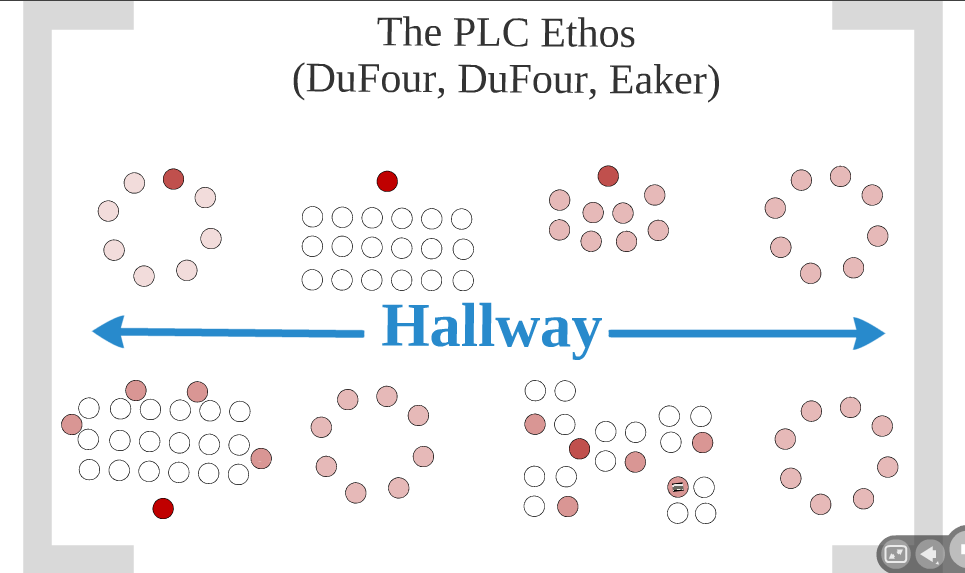
In countless conversations, I have talked with numerous people about the phenomenon of school change. Basically, schools are slow to change. At TEDx last week, several speakers made mention of the almost glacial rate of change that seems to describe schools. Why are schools generally so slow to change? Certainly, the slow rate of change must be related to the degree of isolation that describes the condition of most teachers in most schools. Since the Prussians created that model of schooling over 200 years ago that still exists in most U.S. schools today, teachers have worked in relative isolation. For the most part, schools have not enabled systems for teachers to work and learn together, collaborating during job-embedded team time. During my recent TEDx talk, I mentioned Kathy Boles’ description of schools as the “egg-crate culture.” For the most part, teachers do not live in a system that encourages exchange of ideas.

Then, on Saturday, the Wall Stree Journal published an essay by Matt Ridley – Humans: Why They Triumphed. Essentially, Ridley argues that creative invention among humans occurs because of exchange…trade. “The rate of cultural and economic progress depends on the rate at which ideas are having sex.”
So, if schools hope to keep up with the rate of change predicted for the 21st century, then we must create opportunities for greater exchange and trade of ideas among teachers. We must enable teachers to collaborate as a regular and expected mode of work. Let’s practice what we know to be best practice. What if we re-imagined the egg-crate and nested the eggs together? What if schools were structured so that teachers could exhange ideas and creatively innovate for educating 21st century learners? Schools might lead the change of the future, rather than struggling to keep pace.

Agriculture and Curriculum-Context

Currently, I am reading Malcolm Gladwell’s Outliers. As I read chapter 8, “Rice Paddies and Math Tests,” I am struck by the metaphor created in my mind by what Gladwell writes in section #3. On pages 232-233, he states:

  • “The most striking fact about a rice paddy – which can never quite be grasped until you actually stand in the middle of one – is its size. It’s tiny. The typical rice paddy is about as big as a hotel room. A typical Asian rice farm might be composed of two or three paddies. A village in China of fifteen hundred people might support itself entirely with 450 acres of land, which in the American Midwest would be the size of a typical family farm. At that scale, with families of five and six people living off a farm the size of two hotel rooms, agriculture changes dramatically.
  • “Historically, Western agriculture is “mechanically” oriented. In the West, if a farmer wanted to become more efficient or increase his yield, he introduced more and more sophisticated equipment, which allowed him to replace human labor with mechanical labor: a threshing machine, a hay baler, a combine harvester, a tractor. He cleared another field and increased his acreage, because now his machinery allowed him to work more land with the same amount of effort. But in Japan or China, farmers didn’t have the money to buy equipment – and, in any case, there certainly wasn’t any extra land that could easily be converted into new fields. So rice farmers improved their yields by becoming smarter, by being better managers of their own time, and by making better choices.”

In many U.S. schools, in the Western fashion, have we, over time, simply added more acreage to the curriculum – more and more rows and plots of content to cover? Are we reaching any sort of diminishing returns? What if, instead of adding content and linear coverage, we thought smarter about working a “tiny-er” plot of content by being more skill oriented? Could we release ourselves from some of the pressure to cover (a teacher-centric method), and replace our focus with greater intention on genuine learning (a student-centric method)?

In my own classroom, what could my “rice paddy” be? How could I create the conditions necessary for my students to learn that skill-oriented, smart-farming, rather than creating the conditions for my students to rush through content? If and when I can answer these questions, I may well be on my way to a more 21st C. manner of thinking.