-
“As part of the 2013 Global Innovation 1000 study, Booz & Company surveyed executives at more than 350 companies around the world to learn more about the digital tools that are transforming innovation. Our results show that at the development phase, productivity tools have reached maturity—most are widely used and effective. In other phases, particularly the front end of the innovation process, companies are experimenting with new marketing and customer insight tools that have game-changing potential.”
-
The Design WalkIn – Explore Create Repeat – by 4ormat
COOL! “The Design WalkIn is a storefront design walk in clinic that helps to facilitate relationships between designers and the general public. Designers, just like any other professional, have to be the right fit. We realized we were really good at brokering these relationships. We also had extensive networks within several practices of design, so we set up this clinic called the Design WalkIn that popped up on King St W last year. It was open to the public to come and book an appointment with a specialist.”
I can imagine MVPS learners creating such a service in Sandy Springs!
-
We Can Do It: Learn New Things Effectively – Explore Create Repeat – by 4ormat
A “lesson plan” for #deeperlearning. If I were to have a magic wand or be granted one wish for BIG change in education, it would be to infuse and integrate this kind of philosophy and practice into more of the foundational bedrock of schooling. For me, this connects to my two favorite statements by Sir Ken Robinson: 1) Schools should ask “How are you smart?” not “How smart are you?” and 2) The basics are purposes not subjects.
-
If you want to learn something new, take it into your own hands.
-
Embarking on a path of innovation and self-initiation, the need for specific skills reveal themselves simply through necessity and process — you can plan ahead, but that can only take you so far.
-
The more you become invested in your idea, the more you’ll want to learn in order to refine it and make it better.
-
A sum of small accomplishments can ultimately pave the way towards bigger things,
-
Teresa Amabile’s work connected to small successes. Links to Growth Mindset and grit work with Angela Duckworth, Paul Tough.
-
-
#NOV8 National Innovate Day! Spread the Word! #MVPSchool #MVIFI
Happy “Innovate Day!”
(November 8… Nov. 8…think about it as a car license plate…sound out the letters in “N.O.,” then blend the sounds of the “V” and the “8.” Got it?)
I mean, we have a smorgasbord of national days for this and that. Why not an “Innovate Day” – and on Nov. 8, of course?! We talk about the importance of innovation. We should celebrate it more!
What will you do today to:
- Observe
- Question
- Experiment
- Network
- Associate
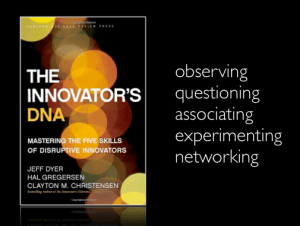
and employ the characteristics and traits identified in Innovator’s D.N.A.?

What risks will you take? What will you be gritty and persistent about? How will you celebrate the day by exercising your growth mindset to work at the intersection of creative expression and functional problem solving? How will you raise up human-centered solution seeking? What will you design?
How will you NOV8 today?
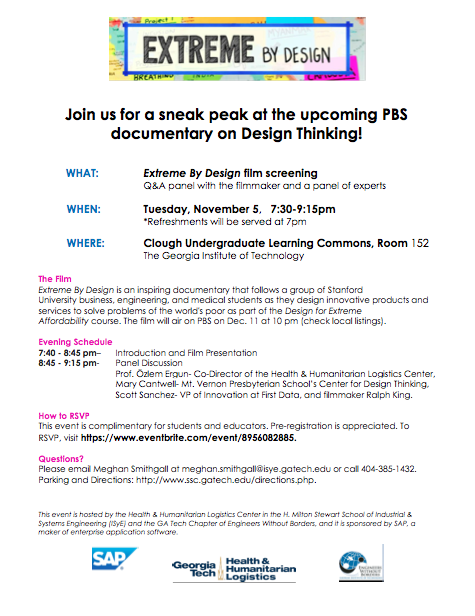
Extreme by Design film screening #DTK12Chat
#MustRead Shares (weekly)
-
21 Reasons To Quit Your Job And Become A Teacher | Katrina Fried
A truly inspirational piece that reminds us professional educators to be grateful for our work. At the same time, I can’t help but think that one does not have to “Quit Your Job and Become a Teacher” if we would work more earnestly for Education 3.0, which could provide more opportunities for student learners to connect with “teachers” in their workplaces… a different way of thinking about “school.”
[HT @RhettsMustangs]
-
Recruiters Without Borders – Companies Scout Globally – NYTimes.com
“The third annual Global Employability Survey, designed and commissioned by the French education consulting firm Emerging and carried out by the German market research firm Trendence, asked recruiters and senior international executives to profile an ideal university graduate — and the ideal university producing such graduates.”
[HT Greg Jones @CoopScience]
-
An oldie but goodie! Hat tip to Eileen Fennelly for sending me this piece and reminding me of it. Krakovsky gives a strong summary of Dweck’s mindset work and connects to a number of related researchers and applications.
How are you thinking about the “package” we call “school?” #MVIFI
Do you ever wish you could choose the particular cable (or satellite) TV channels that you most want? Instead of having to buy the package service that comes with 361 channels or 902 channels, you could autonomously select, a la carte, the specific channels that you want to view.
Well, I’ve wanted to do that.
Listening to NPR’s Planet Money “Episode 488: The Secret History of Your Cable Bill” on a recent morning walk, I started to wonder how traditional school is like cable or satellite TV. Will student learners always have to “buy the entire package” of this class of math and that class of science, this class of English and that class of social studies? Or will we soon see student learners able to individualize their school subscription bundles?
It’s happened in music. We no longer have to purchase the entire album or CD. We can just buy the particular song we want and create our own playlists. It’s happened in news and broadcast journalism, and we now have the ability to create personal news stations and narrowcast our own story collections.
And it’s going to happen in schools. Well, it IS happening around schools. Think Khan Academy. Think Coursera and Udacity (Hat tip to EdSurge). Think Mozilla OpenBadges project. Think Juliette LaMontagne’s Breaker. Think Seth Godin’s Krypton Community College. Think of the future mashup of those ideas and ventures!
It’s highly likely that my 9 and 6 year-old sons will be able to autonomously aggregate courses and experiences (with badges and endorsements like on LinkedIn) and bundle their own “College Degree,” which I hope will include some residential, face-to-face relationship building in a particular physical community, too. (I imagine that it will.) But who knows?!
Learners entering MIT, Stanford, etc., will more and more be able to enter with NUMEROUS courses from those institutions already IN their digital portfolios. Will our schools require the seat-time, residential equivalents of those MOOCs? Or will they we build on the increased capacity that’s already been built when the learners reach them us?
How are you thinking about the way we package and bundle “school” in an age where people can increasingly pull and self-package the content-and-experience streams that best work for them, their passions, their interests, and their needs (with mentorship, of course!)?