A Quick Story
“Dad, I’m gonna sit right here and write a story,” said PJ as he slung his five-section, lined-paper, spiral notebook on the kitchen table where dad was sitting.
“PJ, you have to do your math homework,” came mom’s voice from the office. Mom peeked around the door-less opening that joins the kitchen and the office. She and dad exchanged glances, and they both deemed that they were thinking the same thing.
PJ looked to dad as if for confirmation of the homework directive, but a depth in his gaze seemed to hold out hope for a possible contradiction to mom’s decree.
“PJ, you better do your ‘have-to-dos’ before your ‘wanna-dos,'” said dad, more than a bit disappointed that they couldn’t be one and the same thing.
PJ hung his head a bit – speechless. He slunk into the office and exchanged his story notebook for the math worksheet, “Math Link 12.5.” The toss of the notebook on the desk that PJ and his brother share made a rather booming smack, yet the noise seemed strangely muffled, too.
“Do you find it ironic that PJ wants to write a story, but we told him no because of math homework? I mean, he loves math, too, but he simply wants to write a story before we eat dinner.” Dad tried to keep his educationally philosophical outbursts to a minimum at home, but his reaction to the story-desire versus math-requirement leaped from his mouth before he could trap them in his bearded lips.
“I do find it a bit ironic, but his teacher assigned the math homework, and it has to get done. Dinner will be in thirty minutes, and then it will be time for a bath, a story, and bed. I love that he wants to write, but the math homework is waiting. He wanted to play outside after school, and I thought that was important, too.” Mom made perfect sense as she explained her guidance and contribution to PJ becoming a diligent student of the routines of school and home.
Dad agreed, but he remained pensive. He could see that mom was struggling a bit with the moment, as well. He could see her mind working overtime on the issue – seeming to project into what the next eleven years of this would be like.
A Longer Contemplation (not the writing below…the amount of time I have spent thinking about this stuff for the past 10-12 years)
PJ never returned to write that story. He completed his math homework though (a red “12/12” now resides on the top of that paper, which PJ studied for all of two seconds, if that). He’s written other stories since that moment three weeks ago, but I asked him each time, “So, is that the story that you were gonna write before dinner that night you had to do your math?” Every time, PJ responded, “No, that story’s gone. I cannot seem to remember what I was gonna write about then.”
PJ is a first grader. He loves stories and he loves math. He loves science and he loves art. He loves to explore and discover. He loves to be accompanied on his journeys and uncoverings. If I had kept tally of all of the time that he spends asking me math questions – and asking me to ask him math questions – I’d have a tally sheet at least a mile long. Maybe that makes him like most seven-year-olds…at least many seven-year-olds in the U.S. I’m not really sure, but he seems “normal” to me. [Note: YES! I think my boys are the most amazing children in the world! Far beyond “normal!” However, in this contemplation, I merely mean that PJ seems typical to me in his seven-year-old love of self-directed, yet occasionally-guided, learning.]
I have remained puzzled about what mom and dad decided to do in the above quick story. I am surprised, yet not so surprised, about how much I relive that moment in my mind. Did we help PJ? In the short run? In the long run? Both? Neither? What seed did we plant in that moment about the “rules of doing school?” What seeds did we plant in that moment about pursuing one’s current passion for writing and telling stories? Why hasn’t PJ returned to that story to write it down? What would that story have been like if he had written it? What if I had encouraged PJ to write just a concept line for that story? Would he have been able to return and remember?
I don’t mean to overplay this specific issue. In it’s own right, it is not keeping me up at night. However, in a more general sense, this issue of homework/family-time/pursuit-of-self-directed-passions is causing me to “lose a little sleep.” I think about this story as a microcosm of our next eleven to thirteen years as parents. How much quality family time will we use to wrestle and wrangle about homework? How much of a “second shift” will our boys have to work after they complete their first work shift during the typical school day? Will there be enough “white space” and “room to breathe” among all of the activities, extra-curriculars, homework, family time, etc.?
As a an educator and school principal, I have contemplated this homework dilemma for a long time. I try to sympathize and empathize with our students and their families. Certainly having my own children has helped me understand at a different level and to a greater degree.
Last January also helped me understand better. In Atlanta, in January 2011, we missed a week of school because of ice and snow. I will not tell you the actual number of parent emails that I received by midweek asking for the teachers to assign some distance learning and homework. Almost all of the emails indicated that “my kids are driving me crazy…can you assign something for them to do?!”
Is this where are are as a school-based society? Do we really want such school-directed work for home? Are we losing the capacity to rear and educate self-directed children because we strictly structure and directly distribute specific assignments that possess relatively simple, discreet answers?
A Set of What If’s for Making a Homework Transition…Assuming HW Will Survive
If homework must remain (which I question, but not here)…
- What if homework were more general in nature? What if PJ’s first grade homework expectations were more like:
- Write at least one story each week. Length and topic are far less important than you feeling like you can write for the joy of telling a story. Format is relatively unimportant, too, at this point. Some weeks, though, consider posting a story to a family blog, if you have one.
- Engage in some numeracy-based thinking each week. You might do some counting of objects around the house and build some different tables and graphs. You might be in charge of measuring stuff that needs measuring around the house. Help your mom and dad cook and be in change of the ingredients…what would happen to the recipe if your family contained twice as many people? [Perhaps at first, parents would need a menu of suggested activities. Hopefully, this menu could be consulted less and less as students and parents simply engaged in the natural math that happens around the house everyday. This same idea may need to exist in the weekly story, too.]
- Make art.
- Eat most of your meals, as a family, more slowly – try to hang out for an hour as dinner is prepared, eaten, and cleaned up. Enjoy family conversation.
- Read.
- Play.
- Explore and experiment. [Maybe use all of the above as inspirations for your stories…or don’t and just use your imagination.]
- What if homework was to record a brief podcast of the child telling the parent of something really fun and interesting that happened at school that day/week? A question asked? A curiosity aroused? What if these brief podcasts were archived and cross-posted at a class Pod-o-Matic site with tags and categories for sorting and studying during the school day? [While this activity perhaps would have a learning curve for some, I bet by the fifth or sixth time, the kids and parents would have the hang of doing this in 10 minutes or less. Think of the good communication habits it could form. Think of the feedback it could provide about what exactly is interesting to young students about school.]
- What if homework in older grades was developmentally progressed from the above? What if the same bullet-points were used, but the level of “content expectation” were simply more advanced for the age of the child?
- What if there were no homework, per se? What if students were expected to be in school for 7-8 hours…sleep for 8-9 hours…and pursue the other parts of themselves and be with family for 7-9 hours? Of course, travel time, shower time, etc. would come out of the total. Would this really be so bad for learning? At age 7? At age 12? At age 17?
- What if schools developed more of an “adventure game” approach to homework? I am thinking of some of the video games that my sons and I play on the Wii…like “Dawn of Discovery.” What if there were a web site that had some sort of interactive board with general suggestions for explorations and perusals that could be “homework” in a general sense (rather than worksheet #15.8)? Imagine a tic-tac-toe board online, or a Jeopardy-like board, or a board game like screen. Perhaps there are nine, thirty-five, or some other number of spaces/areas. If students were having trouble coming up with an exploration of a self-determined nature, then they could go to this online resource for suggestions. (This would have helped during “Snowcation 2011!”) Or, perhaps students would be expected to complete three or four of the nine spaces/areas a week. Or they could traverse the online game board at a determined pace and rhythm. Such a system might have real promise for more integrated-studies homework – homework that combines different disciplines instead of having traditional, siloed homework in several subjects.
- What if more classrooms were flipped? [Doesn’t necessarily address opportunity costs of lost family time or time to explore one’s own passions.]
A Few Pieces About Homework
- “The Truth About Homework.” Alfie Kohn. Education Week. September 6, 2006.
- “But I Need to Assign Homework! Look at All I Have to Cover!” Alfie Kohn. Huffington Post. March 3, 2011. [Comments, 64 of them, are interesting.]
- “Duke Study: Homework Helps Students Succeed in School, As Long as There Isn’t Too Much.” Harris Cooper. Duke Today. March 7, 2006.
- “Five Hallmarks of Good Homework.” Cathy Vatterott. Educational Leadership. September 2010.
- “Homework.” David Truss. Pair-a-dimes for Your Thoughts. April 26, 2011.
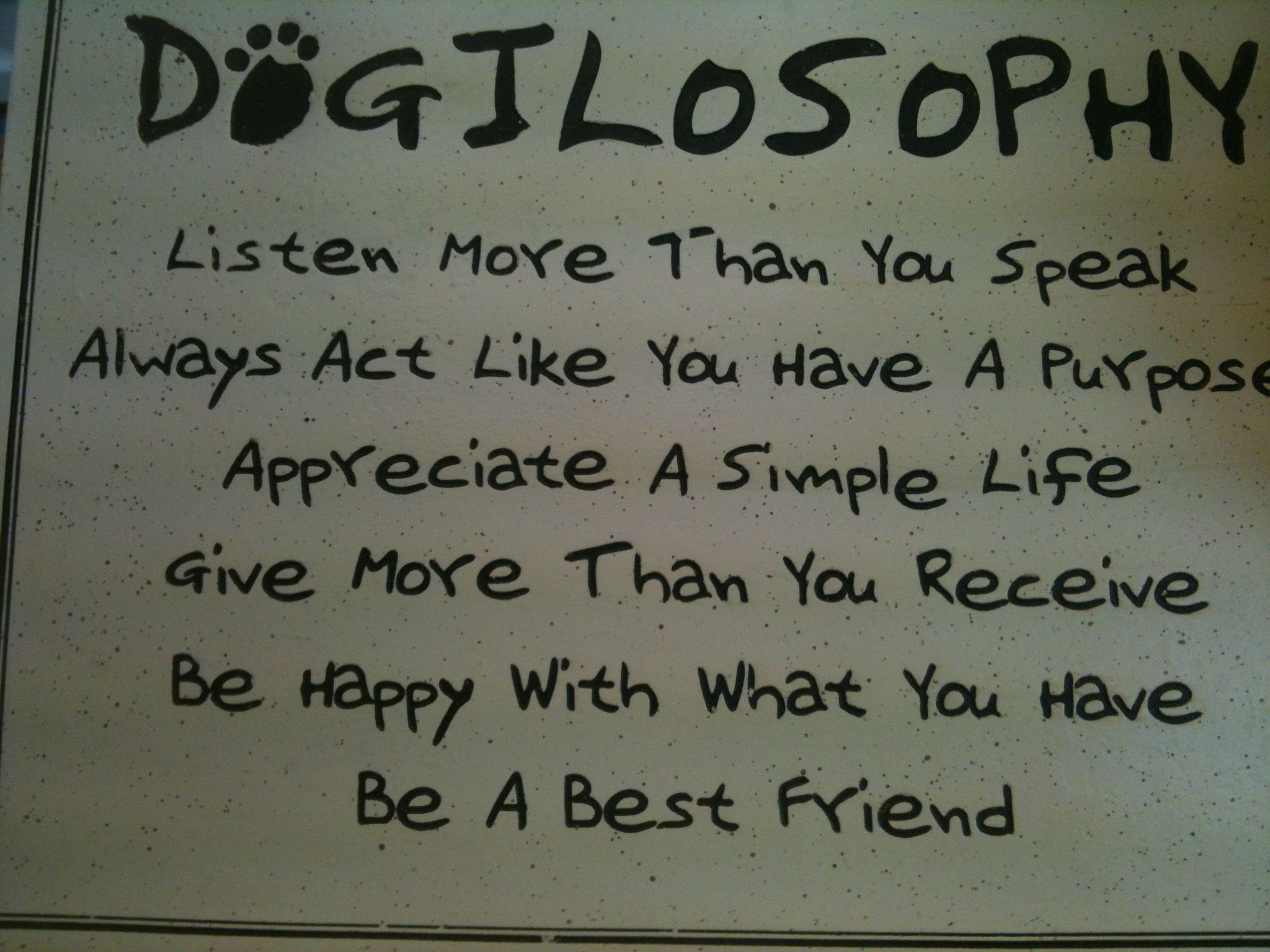
Oh well. I’ll continue contemplating. After all, it’s about learning.
What are your thoughts on homework? What resources, research, and practices would you add?

 it's about learning