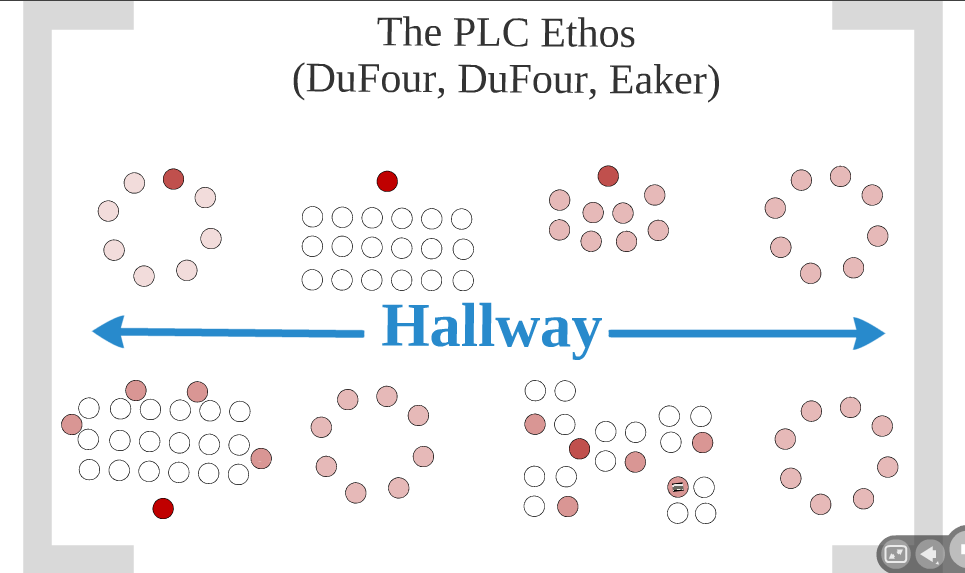
In countless conversations, I have talked with numerous people about the phenomenon of school change. Basically, schools are slow to change. At TEDx last week, several speakers made mention of the almost glacial rate of change that seems to describe schools. Why are schools generally so slow to change? Certainly, the slow rate of change must be related to the degree of isolation that describes the condition of most teachers in most schools. Since the Prussians created that model of schooling over 200 years ago that still exists in most U.S. schools today, teachers have worked in relative isolation. For the most part, schools have not enabled systems for teachers to work and learn together, collaborating during job-embedded team time. During my recent TEDx talk, I mentioned Kathy Boles’ description of schools as the “egg-crate culture.” For the most part, teachers do not live in a system that encourages exchange of ideas.
Category Archives: PLC
Protected: Mindset/Attitude has great impact (Navigator)
Blog Motivation
Since I began this blog, I have struggled with it. I started by thinking that I would try to write what others would want to read. Now, I realize that I will be much more successful if I write what I want to write…and trust that those who are interested will read the blog.
ers who are committed to learning and rethinking the ways we approach and support the classroom. For the past three weeks, we have been exploring the modeling method of instruction. We investigate, discover, record data, collaborate on interpreting the data, and formulate better understandings of the world. An example of such an investigation is illustrated below with some spring oscillation data we have been collecting. What’s more, we work together to devise how we might better create such exciting learning environments and experiences for our students.
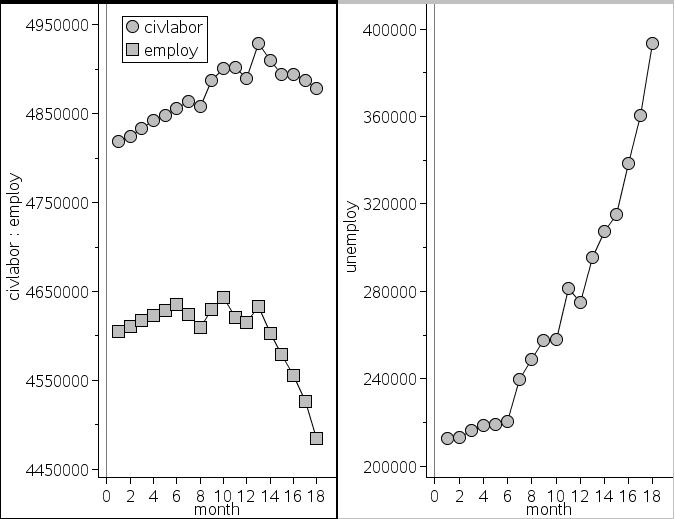
statistics in an effort to create a learning experience for Economics 8. The investigation has been captivating and invigorating, and I do not even currently teach a section of Economics 8. My PLC peers have inspired me to explore, to ask questions, and to seek for answers. Isn’t this exactly what we want for our students? What better way to build such opportunities than to participate in such opportunities ourselves.A Quick Journal on Scope
Lately, I am thinking quite a lot about the questions of curricular scope, or content-driven curriculum. Why do so many educators feel such pressure to cover such an ambitious scope of material, say from “A to Z?” For the 21st Century, should we be looking for a different model of “coverage” that balances better deep learning with certain content knowledge acquisition? I think we should. Of course, a degree of content knowledge is arguably necessary. However, filling the head with knowledge, like filling a cup with water, is an outdated model for education. In 2009, I believe we know from the most recent brain research that our grey matter does NOT function like a vessel to be filled.
For the past two weeks, the Math-Science PLC (Professional Learning Community), of which I am a member, has been engaged in two modeling activities that involve exploring the phases of the moon and the illumination of the Earth. While the pace of learning has been slower than a delivery relying on “sage on the stage,” efficient lecture, the quality and authenticity of the learning have been rich and extraordinarily high level. By acting as a “guide on the side,” the PLC facilitator has provided a learning experience that will stick with me forever. Finally I genuinely understand the qualities of shadow and illumination for the Earth and the moon, finally I can understand the sinusoidal function that describes the data, finally I appreciate that exploration and discovery should be the driving, motivating forces in a classroom. Here’s to learning more by doing less.
Good Intentions…

With the noblest intentions, I started this blog in order to improve communications. As it turns out, I actually have to write to the blog to communicate in this manner! Looking back over the two months since my last posting, I am not sure that I could explain why I have not posted anything here on a more regular basis. When I began this blog, a trusted friend told me to start small and plan on posting once a month. I thought I could post at least once a week. Well, the friend was correct, and I have learned. Without falling into the cultural trap of declaring this a “New Year’s Resolution,” I will try to do better. I will try to write more regularly, and I will try to write things worth reading.