Calculators, Spell Checks, and Ideas

As a regular thread of my educational contemplations, I wonder about the use of calculators and spell checkers in our learning. The debate is more than just about those tools – it’s really about the heart of learning, automaticity, and retained knowledge. I have a colleague that uses this analogy to try to convince me of her side of the argument: “Bo, are you teaching your boys to tie their shoes, or will they forever wear velcro?”

Recently, Bill Ferriter posted a brilliant piece entitled “Can Texting Help Teens with Writing and Spelling?” Instantly, it reminded me of Jill Gough’s extraordinary post, “Calculator is to Arithmetic as Spell Checker is to Spelling???”

This morning, when I re-read both posts (I am a “stack reader”), I was reminded of the 6+1 Writing Traits Rubric that I have been studying with colleagues for the past 18 months. Finally, I had the Eureka Moment (sorry…I mean Coffee House Moment, Steve)! Texting and spell check and calculators may never help with conventions. BUT…I can imagine, as Ferriter and Gough suggest in their posts, that these tools make it easier for kids to spend more time in the other 5 areas: Ideas, Word Choice, Sentence Fluency, Organization, and Voice (and the direct or comparable areas in numeracy and mathematics).

As I understand the Bard Method of writing, one major tenet is to write often and to write often. We learn by doing. Failure is part of the practice. We don’t reinforce bad habits to an unrepairable degree when we fall while learning to walk or talk. Why do we assume mistakes always reinforce bad habits?

According to Ferriter and Gough, these tools are not crutches. I offer that they may even be wings for getting off the ground with ideas, organization, etc. May be worth testing the hypothesis, don’t you think?

Do Schools Match the Tools?

With the creation and proliferation of Web 2.0 technology, I wonder if we have entered the first time in history that primary media and typical school do not match. Could this be a fundamental cause for the urgency that seems to define discussions of educational change for the 21st century?

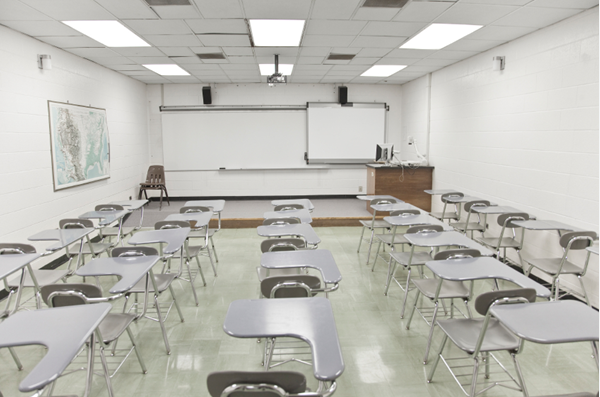
What do I mean about the match between primary media and typical school? Well, when Socrates was utilizing the method that bears his name, the primary medium was voice, inquiry, and discussion. “School” matched that basic model of media. During historical periods in which mass-produced print media dictated information relay, schools grew to rely on the same – books. As the industrial revolution produced radio and TV, information was broadcast from a sending station to a set of receivers. We learned to “sit and get” our information. School transformed into a comparable system. In fact, in typical factory model, we efficiently organized classrooms in rows and columns of “receivers.”

Today, in my opinion, we incorrectly refer to students in school as “digital natives.” They are not born with innate digital understanding. The world they live in as children, though, is very different than the world we lived in as children. As we all know, they do grow up in a world in which they have never not known cell phones that function more like computers than telephones. Students in high school essentially have no memory of life before Web 2.0. What an effect this must have on growing learners, day in and day out. They live with an Internet to which they could always contribute. The can create, contribute, and connect. They don’t just “sit and get” like couch potatoes watching a screen or listening to the radio. They use services like Pandora and order what they want on the radio – they determine the broadcast. They make playlists with the computer, not a set of CDs and a tape deck. They text, tweet, and facebook.

Until they go to school. Schools, for the most part, are still in the broadcast and receiver phase. Schools are more like those sets of CDs and tape decks. Technology is a faster adapter than schools. Why? Because our professional development largely still exists as “sit and get” – broadcast and receive. When administrators and teachers create conditions for School 2.0, things start to happen.

Through educational innovation driven by 2.0 learners, countless schools are changing for the better. They are working diligently to ensure that student learning is at the core in our 21st century world. Schools are moving from an unintended focus on what’s convenient for the braodcasters, to an intentional refocusing on what’s best for the co-creators. Schools are leveraging Web 2.0 tools, utilizing the last two decades of brain research, and organizing away from the egg-crate culture into cultures of collaboration. Thank goodness! May we continue to strive for improvements and enhancements that will help our students see school as a primary place of learning – not an irrelevant pitstop between periods of more self-engaged exploration and discovery.

Note: Photos acquired from iStockPhoto.

Digital Learning Environments

This week I felt very blessed to explore a few “digital learning environments.” First, on Tuesday, November 9, I attended an event at Greater Atlanta Christian School hosted by Apple, Inc. While I participated in the three-hour, morning session, I gathered some artifacts of my learning. Then, I spent an hour producing this 3.5 minute video.

Next, I enjoyed the encouragement, modeling, and instruction of a colleague as three of us teachers explored graphical blogging, or glogging. In preparation for a devotional that I am presenting next week, I experimented with a glog myself…

1-Buttock School

Finally, in an English PLC (professional learning community) meeting, I was fortunate to be part of a thought-provoking discussion about the possibilities of 21st century learning and the potential dangers of fetishizing technology. From the rich and thoughtful comments of my friends and teachers, I was reminded of the advice that digital learning environments are NOT about the technology. The technology should be like air – virtually taken for granted. The technology is merely a means to the learning – learning about mitosis, Romeo and Juliet, Spanish, writing, graphing, letting the learning move us to one buttock, looking for the ways we can help others’ eyes shine, thinking about how to start a movement. It’s not about the technology. It’s about learning.

21st C. Learning Summit – And End and a Beginning

On Thursday, October 14, 2010, Solution Tree’s 21st C. Learning Summit closed with provocateur Will Richardson. For the first time that week, rather ironically, the speaker established a backchannel for behind-the-scenes conversations and questions. For the first time that week, rather ironically, the speaker used a share-able presentation tool that required no paper.

https://docs.google.com/present/view?id=ah8n38hnwpnq_765gr5sjmd9

With a similar message to that of Chris Dede, Will Richardson compelled the audience to realize that learning is a 24-hour-a-day possibility with the advantages of countless learning networks. Education is distributed now, and it is no longer essentially confined to the time and space called school. In fact, school sometimes gets in the way of deep, efficient learning, because it often is the slowest institution to change and adapt. Students utilize smart phones rather effortlessly to stay connected and to learn, but schools often ask students to check their phones at the door. Cheryl Lemke had said it the day before – school is now but one of many nodes on a stident’s primary learning carrosel, and we need to accept that we no longer occupy the most important or central position…not while we lag behind this generations normal modalities of learning and growing. Doug Fisher, too, practically scolded us for banning cell phones from students in school. If we don’t teach students to use their networks and tools wisely, who will? Schools, let’s make sure we stay relevant and provide the coaching and immersive education that students deserve.

Wall Wisher as Observation Journal Discussion Idea

What do you think of this… http://www.wallwisher.com/wall/Synergy8