To #Unboundary

Unboundary
(n.) strategic design studio, located in Atlanta, GA, which helps companies “define their purpose and pursue significance.” [from the Unboundary web site]

(v.) to remove limits of an area, subject, or sphere of activity [adapted from Apple’s spotlight definition of “boundary”]

In times of profound change, the learners inherit the earth, while the learned find themselves beautifully equipped to deal with a world that no longer exists.

– Eric Hoffer

As you walk into the former Atlanta-roundhouse space that is now inhabited by Unboundary, the Eric Hoffer quote greets you near the door. This is a door, in fact, that draws me in; this is a door that greeted me daily during my sabbatical (see two of many sabbatical posts here and here); this is a door that will mark my coming and going much more frequently beginning on July 15. Through this door, Hoffer reminds me that I am, indeed, in times of profound change, and he reminds us all to be learners embracing change.

During my almost twenty years as a professional educator, and certainly during my almost nine years as a school principal, I have found myself immersed in countless discussions concerning the pace and nature of change in our world. In the most recent years, I have concentrated my efforts to be one who enables and empowers schools to maintain pace with this never-ending change, so that we might help people of all ages serve and lead in our changing world.

Joining the conversations and communities on Twitter and other world-connecting blog media, I have similarly surrounded myself with hundreds and hundreds of professional educators and others who are contemplating and implementing school change so that schools remain deeply significant in an age defined by ubiquitous access to information and learn-anytime-anywhere technology. In so many conversations, both those that happen online and those that happen face-to-face, it seems that we educators are striving to unboundary the areas typically referred to as “school” and “real-life.” During her TED talk, Kiran Bir Sethi beautifully espouses the notion of blurring the lines between school and life so that students can be infected with the “I can bug” and realize their ability to make a positive difference in our world – not when they graduate to their real life, but now, because now is their real life.

On September 19, 2011, I announced that the 2011-12 academic year would be my last as principal of The Westminster Schools Junior High School. I took a leap of true faith. Then, I began to piece together and design a potential next chapter of my educational career as something akin to an innovation strategist and synergist for 21st century school change and development. In the months of October, November, December, and January, I benefited immeasurably from the wisdom, questioning, advice, and guidance of about two dozen individuals who graciously engaged me in countless conversations about how to create a job serving as a hub to the various spokes of this learning-in-the-21st-century wheel. To each and every one of you – THANK YOU! And to my wife Anne-Brown, BLESS YOU for your faith and support, and thank you for being the first and foremost of this tribe who helped me discern my next steps.

As of Tuesday, February 21, I officially have my new, dream job…my next chapter…my ideal, “plan A” role that will allow me to continue and to expand my service as an educational leader in these times of profound change. In his announcement to the Unboundary team, president and chief executive Tod Martin explained my future work in the following way:

Bo joins us in a hybrid role. He will be integrated into existing client work, particularly in workshopping, and will also play an instrumental role in expanding Unboundary into a new arena. Over the past year, you’ve heard me talk about the vision of us developing new kinds of clients — other than corporations — where our skills at transformation design would be valuable. One of the “new kinds of clients” we’ve talked about is education. Bo will help lead our efforts to build a practice and develop clients in education.

Already I am indebted to the visionary leadership of Tod Martin and to the team that he has fielded at Unboundary. So much synergy potential exists at the crossroads of corporate leadership and educational innovation, and I believe that Unboundary works at this exciting crossroads. Likewise, I am forever grateful to Westminster for eliciting and developing in me the vision and the skills that this fine school declares for all learners in its community – to serve and lead in a changing world.

To love what you do and feel that it matters – how could anything be more fun?
– Katharine Graham

I do love what I do, and I feel that it matters greatly. I am excited for this next chapter, to which I take a great deal of learning. Yet, I dare not consider myself learned. I am a continuous learner, and I intend to do all that I can to serve and lead in this changing world – to play my role on the team that strives to define purpose and pursue significance.

Our children – our leaders of today and tomorrow – deserve nothing less.

Synergy2Learn, #EduCon 2.4, #Synergy8 – Questions are the way points on the path of wisdom

How are you engaging learners in community-issues problem solving? Is your school contemplating and implementing more project-based learning? Do you find it challenging to dig into high-quality PBL? Do you wish you could share stories (like around a campfire) about how to utilize real-world issues to guide instruction, curriculum, pedagogy, and learning? Wish you were elbow-to-elbow with a tribe engaged in a project about PBL?!

On Saturday, January 28, Jill Gough and Bo Adams will be facilitating a conversation at EduCon 2.4: “Synergy – Questions are the way points on the path of wisdom.” We hope you can join the conversation. We plan to 1) share our stories about Synergy 8, 2) elicit others’ stories about how they engage in deep-level PBL at their schools, and 3) ask and respond to a big “What if…” question – What if we built a network of people who were taking on the challenges of community-issues problem solving with adult learners and student learners alike?

We might even start a blog to help connect us all…Synergy2Learn. Let’s build something together…It’s About Learning and Experiments in Learning by Doing!

Dreaming #PBL: Whatever It Is I Think I See Becomes a PBL to Me!

Whatever it is I think I see becomes a PBL to me! [sung to the tune of 1977 Tootsie Roll commercial embedded below]

If you were alive and watching TV in the mid to late 1970s, then perhaps you remember this 30 second advertisement from Tootsie Roll…

Simply replace “tootsie roll” in the jingle with “PBL.” Occasionally, my wife and sons will catch me singing this around the house. Truly, just about everything I see becomes a PBL idea to me. This visioning, though, is the result of purposeful and deliberate practice, as I have tried to grow in my capacity to develop “uppercase PBL” opportunities.

On January 4, 2012, I published a blog post about “Contemplating pbl vs. PBL.” In the post, I constructed a two-by-two matrix that helps explain how I think one can move along a spectrum of “lowercase pbl” (essentially project-oriented learning) to “uppercase PBL” in which learners are addressing genuine community challenges and engaging with authentic audiences of co-interested citizens. But how does one even think of such capital PBL ideas?

Based on countless conversations over the past few years, I get the feeling that more than a few educators struggle with the notion of originating and implementing uppercase PBL ideas. Actually, I think the struggle resides more in the implementation than in the origination, but that may need to be its own separate blog post. For now, let’s stick to the topic of originating, or concepting, the uppercase PBL ideas – creating the grand challenges that tend to integrate studies and promote community engagement from our student-learners and ourselves.

A Habit of Seeing and Recording

Concepting and brainstorming ideas for PBL is as simple as developing a habit of seeing and recording. Some may feel that such is easier said than done, but I believe it is really that easy. To form a habit, of course, one must commit to trying and rehearsing. Anyone with vision can develop a habit of seeing and recording, but it does take practice – just like anything else. In today’s world, though, the tools at our disposal make it easier and easier to develop a habit of seeing and archiving potential PBL ideas. Keeping a digital observation journal is a fabulous practice and discipline, if you want to build a resource pool of possible PBL opportunities.

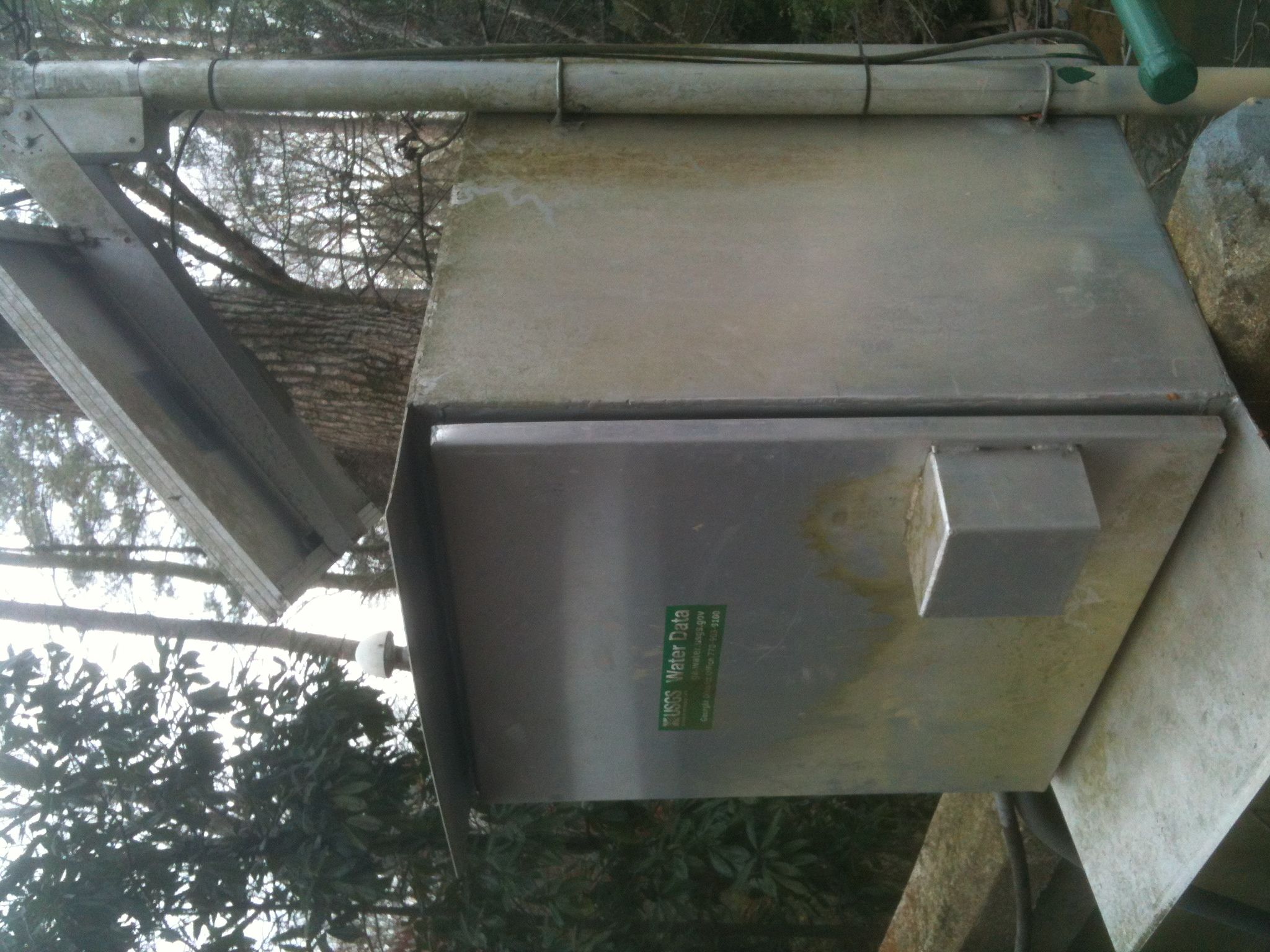
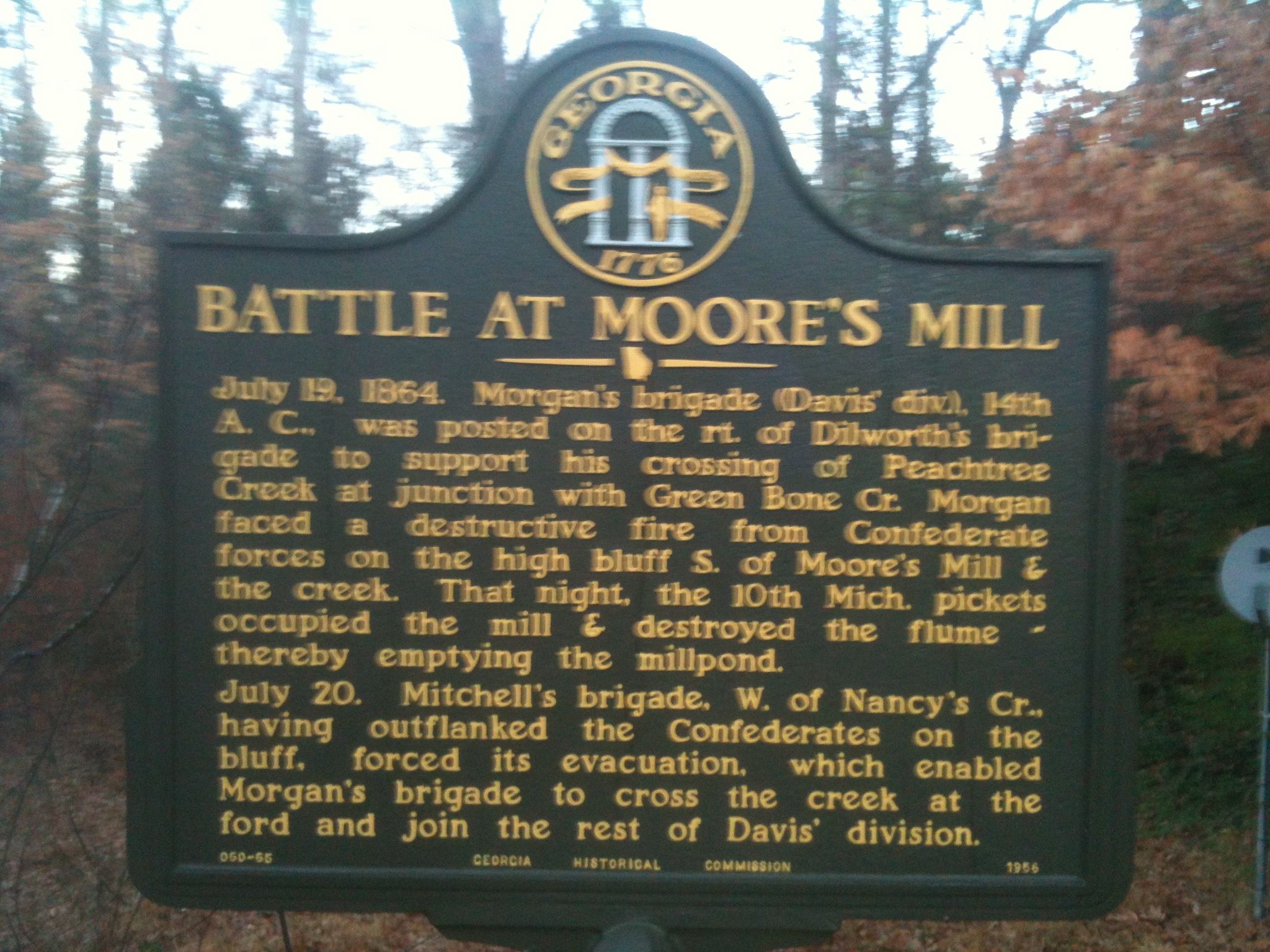
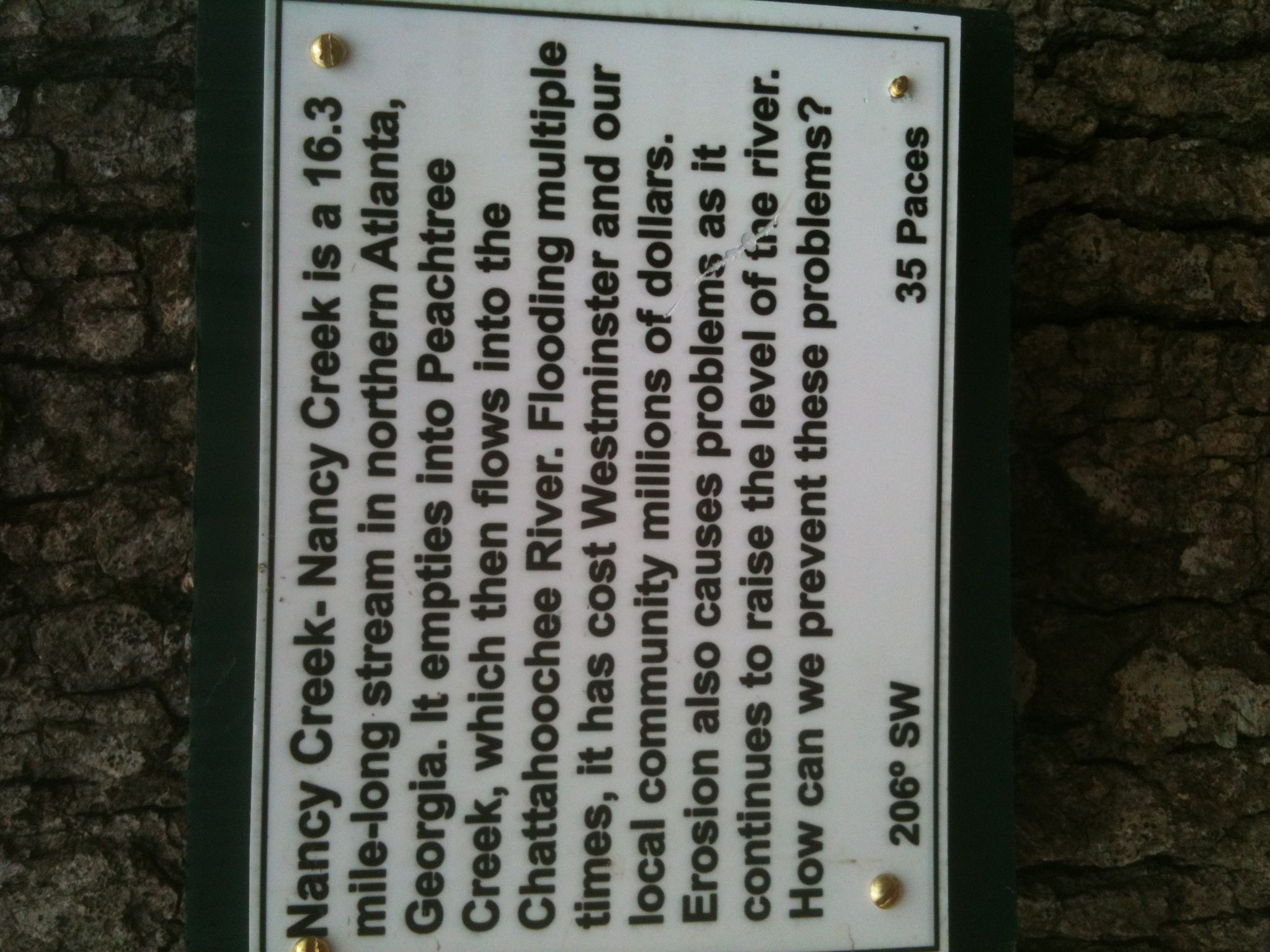
I imagine there are countless ways to keep an observation journal. In essence, though, an observation journal is simply a space in which to record thoughts, questions, and images about the things that one sees while walking around. Because I almost always have my iPhone in my pocket, I rely heavily on this tool to keep my observation journal. As I walk around school and the greater Atlanta area, I often take pictures of things that raise my curiosity. For example, over the Christmas and winter break, I walked my dog quite a bit, and I captured the following images around a few bridges traversing Nancy Creek – the bridges are very close to my school, and Nancy Creek runs through my school campus.

Just from recording these images with my iPhone, I am wondering about fieldwork investigations of the science, math, economics, and history of Nancy Creek. Myriad questions come to mind…

  • What is the water quality of Nancy Creek? How does it change over a year’s cycle? What kind of life is supported by Nancy Creek? Is it safe for my boys and dog to play in Nancy Creek?
  • What data is collected by that big metal box? How does it collect the data? Where does the data go? Who uses the data and how is it used? How could schools help the organization named on the sticker? Could students participate in this data journalism of Nancy Creek?
  • What was the significance of the Nancy Creek area during the Civil War? What is it’s economic and ecological significance now?

Often, to record these images and questions, I upload my pictures and observations to an email-based blog system called Posterous. Then, with categories and tags added, I am developing a significant library of PBL ideas. In Synergy, we use a group Posterous account (see related post) so that all 26 of us are contributing to the pool of potential project ideas. During the first semester, we accumulated over 400 observation-journal posts. Out of those posts, we developed six projects together.

Imagine if a school faculty and/or the entire student body employed such a school-group Posterous (or any such collaborative tool for seeing and archiving) to collectively organize a virtual fleet of observation journal ideas! The PBL opportunities could be endless!

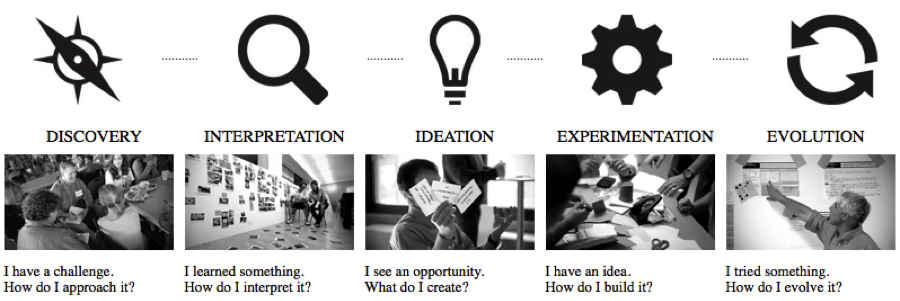
To develop such a habit of seeing and recording is to follow the initial practices espoused in design thinking:

At Design Thinking for Educators, where the above image was screen captured, this five-stage process of designing is more fully explained. For now, though, just think of observation journaling as a means into “discovery and ideation.” As one takes pictures and records questions for one’s observation journal, one is also engaging in a bit of “interpretation.” By posing questions and potential research curiosities, we begin to interpret what we are seeing, as we begin to formulate what projects could emerge from such wondering. To engage in such design thinking is to return to our roots as childhood learners. As Robert Fulghum has said, “LOOK!” may be the most powerful word we articulate (after mama and dada, of course!). And Mary Ann Reilly, in a recent post about “Making Art & (In)Forming Life,” reminds us of the power and potential of observation. We just have to re-open our eyes to that which we might have started to take for granted. We need to teach ourselves to see again…with that childhood enthusiasm for discovery!

A Key for Innovation

Relearning and leveraging our amazing human capacity for seeing is not just a fun way to generate ideas and enjoy the possibilities of challenge in school curricula and instruction. Seeing – as a multi-step, complex system of discovery, interpretation, and ideation – may be the key to educational innovation. In my eyes, innovation is about dreaming, teaming, seaming, and streaming. To dream is to envision. To dream is to “see” with more of our senses and being. To dream is to contemplate what could be.

May we dream big for our schools and our students. May we dream big for the challenges our world faces. Here’s to seeing…together.

LOOK!

[For more about PBL ideation, see the Buck Institute for Education resources, and the Apple Challenge Based Learning resources. I turn to these resources quite a bit!]

[Cross-posted at Inquire Within on September 3, 2012.]

“This is so next level!” Video Team-Teaching in #Synergy

Twenty-four, eighth-grade synergists are working in six discreet groups – their projects originated from the data-mining of over 300 observation-journal blog posts that they collected. The projects are:

  1. Graffiti (is it art, vandalism, both? how can we use it for good?)
  2. Nancy Creek (what can we know and understand about the creek that runs through our campus?)
  3. Crusade for Cleanliness (how could organizational-flow changes enhance the stewardship in our dining hall?)
  4. Obesity (how can we improve the alarming issue of obesity in American youth?)
  5. Sleep (what impact on school do our sleep habits create?)
  6. Habitat for Humanity Spring Fling (how could a school fair raise money and awareness for homelessness?)

Because Jill Gough, one of the two Synergy facilitator-coaches, was presenting at the Learning Forward Annual Conference on Monday, Dec. 5, she was in Anaheim, CA. The other facilitator-coach, Bo Adams, was in Atlanta, GA. Having grown accustomed to and convinced of the viability of team-teaching in such a project-based course, Bo and Jill felt some anxiety about having only one facilitator present to serve best the six groups during this critical phase of their project development.

[In your mind’s ear, cue that quintessential cartoon superhero intro theme.] Never fear…video conferencing is here!

As we think about preparing students for a work world that will most likely include significant use of such tools as iChat, Facetime, Skype, and other video “conferencers,” then it seems natural to practice such work processes. Perhaps students already use such tools socially, but school could help coach the use of such tools for more formal, business-like purposes. Additionally, we should all be thinking more about how we can invite various co-teachers into our classrooms – to break down the walls that seem to preserve the arcane model of one adult per group of classroom students. Practice leads to enhanced proficiency. On Monday, Dec. 5, Synergy engaged in some additional practice of tearing down those 20th century classroom walls. Who knows who else we might next invite to teach with us…from the exterior of our learning space’s four physical walls.

As one student-learner can be heard exclaiming in the video: “This is so next level!”

[This post is cross-published at Experiments in Learning by Doing.]

Connecting Ideas – Action, Traction, Reaction

In Synergy, a non-departmentalized, non-graded, transdisciplinary, community-issues-problem-solving course, we use blogging as a means to communicate and collaborate on ideas as well as to reflect and to revise thinking.

Currently we offer our learners an Action-Traction-Reaction prompt to spur their thinking, reflection, and writing.

One of our learners offers this reflection that connects his thinking about his team’s project with the ideas from Jamie Oliver’s TED Prize Wish:

Relating Jamie Oliver’s Prize Wish to my Project

Posted on November 17, 2011
.

Jamie Oliver, a celebrity chef, wished to educate every child about food as a use of his TED prize. I’ve known about his fight against obesity and eating right since learning about his TV show in 6th grade, so this wish makes sense to me. He’s creating a

Strong, sustainable movement

to educate every child about food.

The core of this action is to create a movement. This core action could be applied to my project, because in my project we are trying to get people to clean up after themselves, and stop cutting in line. Both of those problems are just bad examples that people have seen and copied. Creating a movement would create new standards in the community for cleanliness in the lunchroom, and could reverse the bad examples in place there.

For Jamie’s wish, he wants to create an online community and also a movement. He said

The grassroots movement must also challenge corporate America to support meaningful programs that will change the culture of junk food.

I didn’t know what a grassroots movement is, so I looked it up. I came up with this. “A grassroots movement (often referenced in the context of a political movement) is one driven by the politics of a community. The term implies that the creation of the movement and the group supporting it are natural and spontaneous, highlighting the differences between this and a movement that is orchestrated by traditional power structures.”

For Jamie’s project, he is relying on creating a following, that would create the foundation for his project and help spread the message. But he also would like to create traveling kitchens and a traveling food theater to make his project entertaining and interactive. From my perspective, the traction for this project is based on two components: people and interaction. This is a good formula for other projects who are looking to gain traction in a community. You draw the people in with interaction, and then rely on them to feel passionate and spread the word.

In the comment section of the article, many people were eager to partner with Jamie’s project to support and help organize his ideas. I think that the biggest way to attract reaction like this, is to be backed by TED! But the other large factor is that he’s addressing a large problem and is presenting a sound project plan. Creating this plan is an easy thing to do in Synergy to make sure our projects look attractive in the eyes of the administrators inside and outside of Westminster. If our projects only look half-baked, they won’t attract support.

“Grassroots.” Wikipedia, The Free Encyclopedia. Wikimedia Foundation, Inc. 22 July 2004. Web. 20 Nov. 2011.

[Permission to post obtained from student and student’s parent.]

Do we write to read and learn what we are thinking?  Do we prototype, seek feedback, and revise?  How do we connect our thinking to the ideas of others?

Shouldn’t we practice?

[Cross-posted at Experiments in Learning by Doing]