Prototyping…for 3six5…#1

By the calendar, epiphany has ended. On this 12th day of January, though, we Atlantans just experienced our third snow day…SCHOOL IS CLOSED! Already, as a principal of a middle school, I am receiving texts, tweets, and emails asking, “When will we return?,” “Will we make up these missed days?,” “Could the make-up days interfere with our family vacations?,” “Can your teachers send some homework for my kids to do?” I actually received more than one message posing this last question. When I tweeted about this parental request, I received this immediate reply:
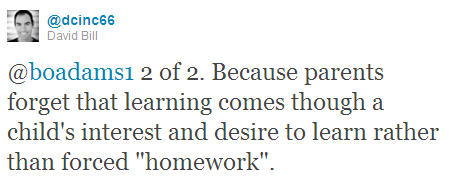
Of course, not all parents have forgotten that learning starts with curiosity and interest. Could it really be possible that even a few have forgotten? While I have never met @dcinc66, he is a member of my PLN, and I believe he has a valid point.

Another member of my PLN is my oldest son, PJ. During our third snow day this week, PJ insisted that we build a robot. After watching the 1980s classic (at least to me) Short Circuit, PJ began saving kleenex boxes, old food boxes, toilet paper rolls, and any other discarded piece of trash that looked like a robot part to him. Today, PJ made it clear that it was prime time to put his corrogated collection to good use. PJ’s brother JT entered the fray, and we three Adams boys felt transported to the robo-lab.

Learning is the hallmark of humanity. When I feel most engaged, I am learning. When PJ and JT are most engaged, they are learning. For me, epiphany continued today. PJ reminded me that learning most often looks like a project. The best learning happens when we choose to explore and discover.

After our robot skeleton was complete, PJ and JT became interested in heartbeats. After all, in Short Circuit, Number 5 was alive! With a stethescope, we measured our heart rate at rest and after a few laps around the house.  A fourth snow day was just announced. Tomorrow, I will not be surprised if the boys ask to shock the kleenex boxes to see if we can jolt Number 6 to life. I think they just assigned themselves their own homework.

Bo Adams serves as principal teacher for the Junior High at The Westminster Schools, in Atlanta, GA. First and foremost, he considers himself a dad. Close behind on the list, he thinks of himself as a “learner-preneur.”

Contagious…I Can…We Can

Jonathan Martin’s post “Project Based Learning for the 21st Century: A Disappointing Video” has been “haunting” me a bit – in a positively good way. I responded with a comment on his blog, and I “thought out loud” by posting this early reaction – “Wanted: PBL ‘Coffee House.'” Even earlier, during Christmas vacation, I posted a vlog in order to contemplate some elements of PBL (“Vlogging is Thinking – PBL“) inspired by the same BIE video that spurred Martin’s “disappointing video” post.

More recently, Martin has posted “8 High Quality Project Based Learning (PBL) Videos.” Also, my learning and teaching partner, Jill Gough, has gotten into the blog-comment discussion, too. I am hoping for even more ripples in the pond…more learners and teachers entering the coffee house for PBL (see Steve Johnson’s TED talk if you are unfamiliar with the coffee house reference).

Now, I would like to offer another response to Martin’s blog post and provide an additional thread for the coffee house discussion about PBL. I am making an hypothesis that Kiran Bir Sethi’s TED talk comes closer to what Martin was hoping for in the BIE video about project-based learning.

Through the video story of Riverside School and “infecting India,” I believe that Sethi hits at the heart of what Martin says he finds to be missing from the BIE video – a meaningful and tangible connection of the student project to a real-world issue…and through media/experiences that make an impact on the issue (as opposed to just making posters for the viewing of members of the class). Relevancy – first-hand-involvement style relevancy – provides the “rigor” (I prefer “vigor“) that Martin wishes for the BIE video.

In the near future, I hope to publish a series of posts about PBL, what stands in the way of PBL implementation, and how schools can overcome those obstacles and integrate more PBL into their curricula. Engaging in this virtual discussion with Martin and others is invaluable to me as I think through the complexities of PBL. Additionally, I find the “What is 21st Century Education?” post to be particularly enlightening about the discipline of quality PBL. And, of course, Linda Darling-Hammond pubishes outstanding work about PBL. For me, the most revealing has been Powerful Learning: What We Know About Teaching for Understanding.

3six5

3six5.

Atlanta Education PLN increases participation in 3six5 project.

Do Schools Match the Tools?

With the creation and proliferation of Web 2.0 technology, I wonder if we have entered the first time in history that primary media and typical school do not match. Could this be a fundamental cause for the urgency that seems to define discussions of educational change for the 21st century?

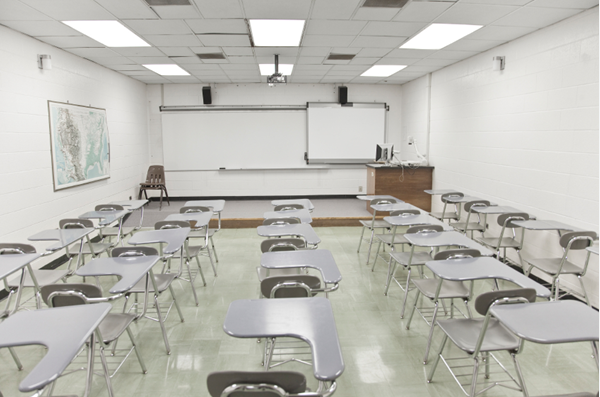
What do I mean about the match between primary media and typical school? Well, when Socrates was utilizing the method that bears his name, the primary medium was voice, inquiry, and discussion. “School” matched that basic model of media. During historical periods in which mass-produced print media dictated information relay, schools grew to rely on the same – books. As the industrial revolution produced radio and TV, information was broadcast from a sending station to a set of receivers. We learned to “sit and get” our information. School transformed into a comparable system. In fact, in typical factory model, we efficiently organized classrooms in rows and columns of “receivers.”

Today, in my opinion, we incorrectly refer to students in school as “digital natives.” They are not born with innate digital understanding. The world they live in as children, though, is very different than the world we lived in as children. As we all know, they do grow up in a world in which they have never not known cell phones that function more like computers than telephones. Students in high school essentially have no memory of life before Web 2.0. What an effect this must have on growing learners, day in and day out. They live with an Internet to which they could always contribute. The can create, contribute, and connect. They don’t just “sit and get” like couch potatoes watching a screen or listening to the radio. They use services like Pandora and order what they want on the radio – they determine the broadcast. They make playlists with the computer, not a set of CDs and a tape deck. They text, tweet, and facebook.

Until they go to school. Schools, for the most part, are still in the broadcast and receiver phase. Schools are more like those sets of CDs and tape decks. Technology is a faster adapter than schools. Why? Because our professional development largely still exists as “sit and get” – broadcast and receive. When administrators and teachers create conditions for School 2.0, things start to happen.

Through educational innovation driven by 2.0 learners, countless schools are changing for the better. They are working diligently to ensure that student learning is at the core in our 21st century world. Schools are moving from an unintended focus on what’s convenient for the braodcasters, to an intentional refocusing on what’s best for the co-creators. Schools are leveraging Web 2.0 tools, utilizing the last two decades of brain research, and organizing away from the egg-crate culture into cultures of collaboration. Thank goodness! May we continue to strive for improvements and enhancements that will help our students see school as a primary place of learning – not an irrelevant pitstop between periods of more self-engaged exploration and discovery.

Note: Photos acquired from iStockPhoto.

3six5

I am thrilled that I will be writing and posting for the 3six5 project! My day is June 16.

the3six5
http://the3six5.com
http://twitter.com/the3six5

Megan Howard – Feb. 10
Jill Gough – May 29
Laura Deisley – June 12
Bo Adams – June 16
Peyten Dobbs – July 7
John Burk – August 17
Anna Moore – August 22