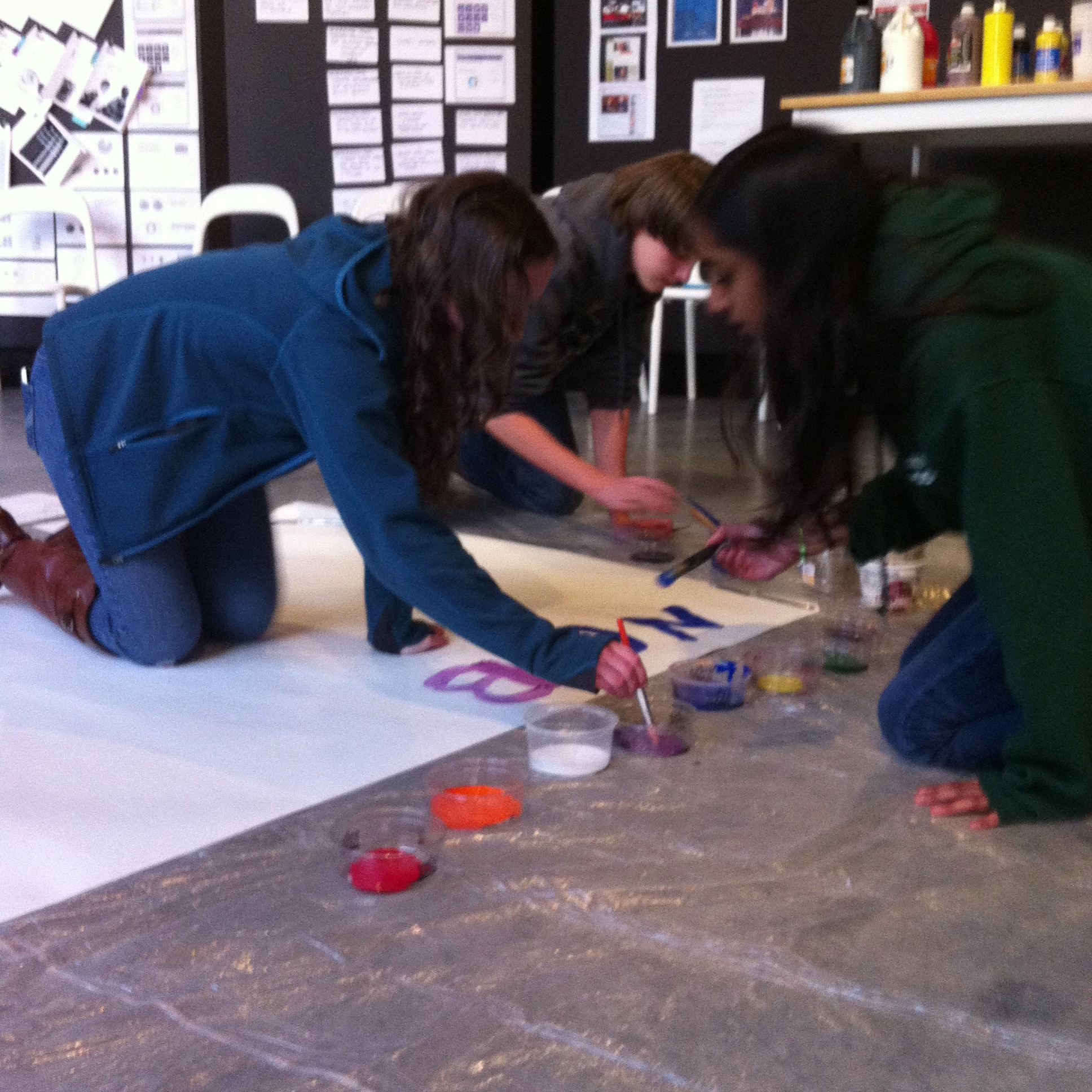
“How do we educate young people to thrive in a world of possibility?” #ImaginingLearning #ListeningSession @Unboundary

A Listening Session’s purpose is to discover each young  person’s deepest knowing about how they would answer the question, “How do we educate young people to thrive in a world of possibility?”
– from Imagining Learning…About Listening Sessions

On Thursday, November 15, 2012, Unboundary hosted Charles Kouns and Stella Humphries from Imagining Learning to facilitate a Listening Session for seven Atlanta high schoolers. Sophomore Tara Subramaniam initiated the opportunity with Charles Kouns and asked me to help her organize the event and invite a group of students from surrounding schools. What inspiring vision and determination from Tara.

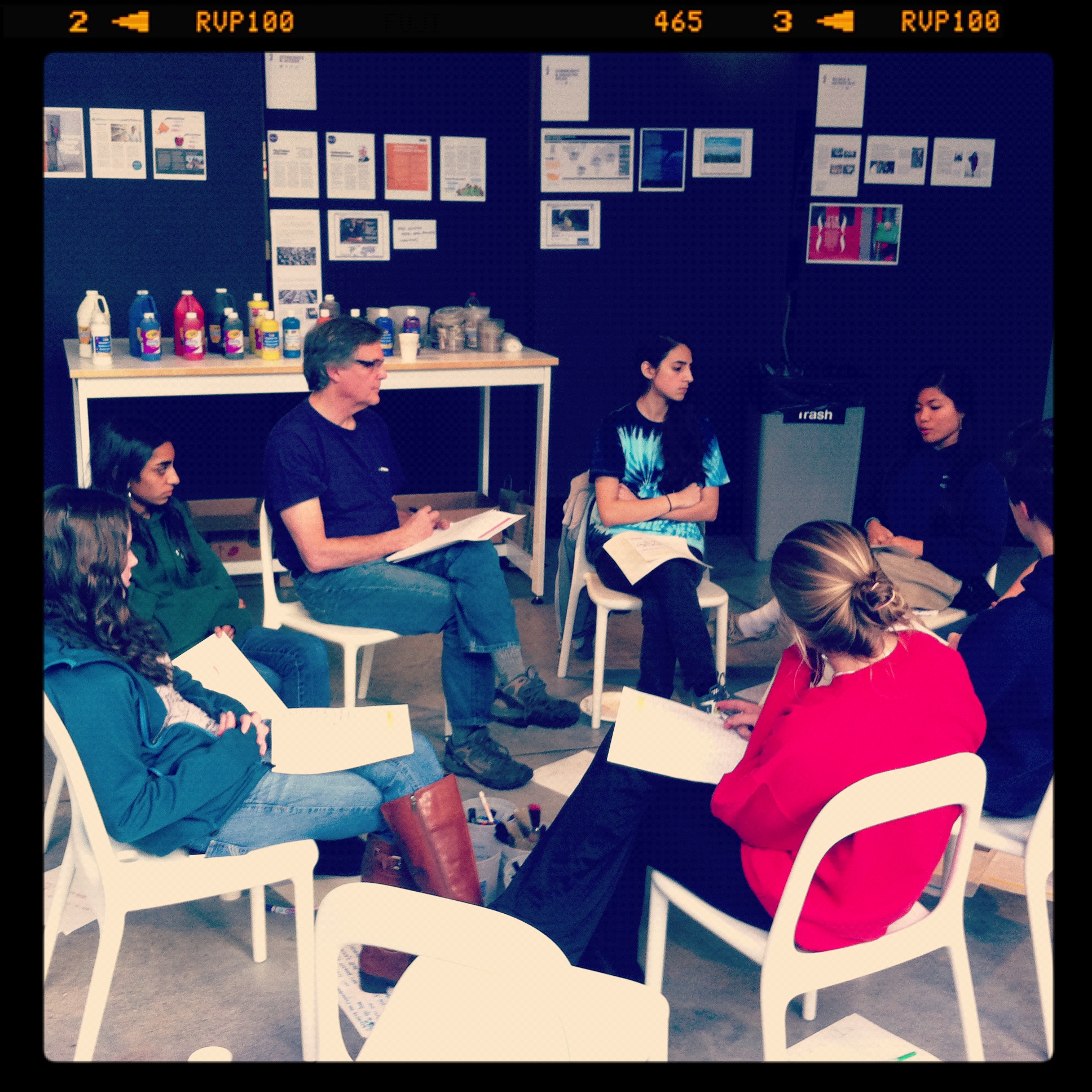
The session unfolded in three stages. In stage 1, Charles explained the purpose of Imagining Learning’s U.S. tour of Listening Sessions, set some general guidelines, and opened the sharing with eight writing prompts to which the students responded.
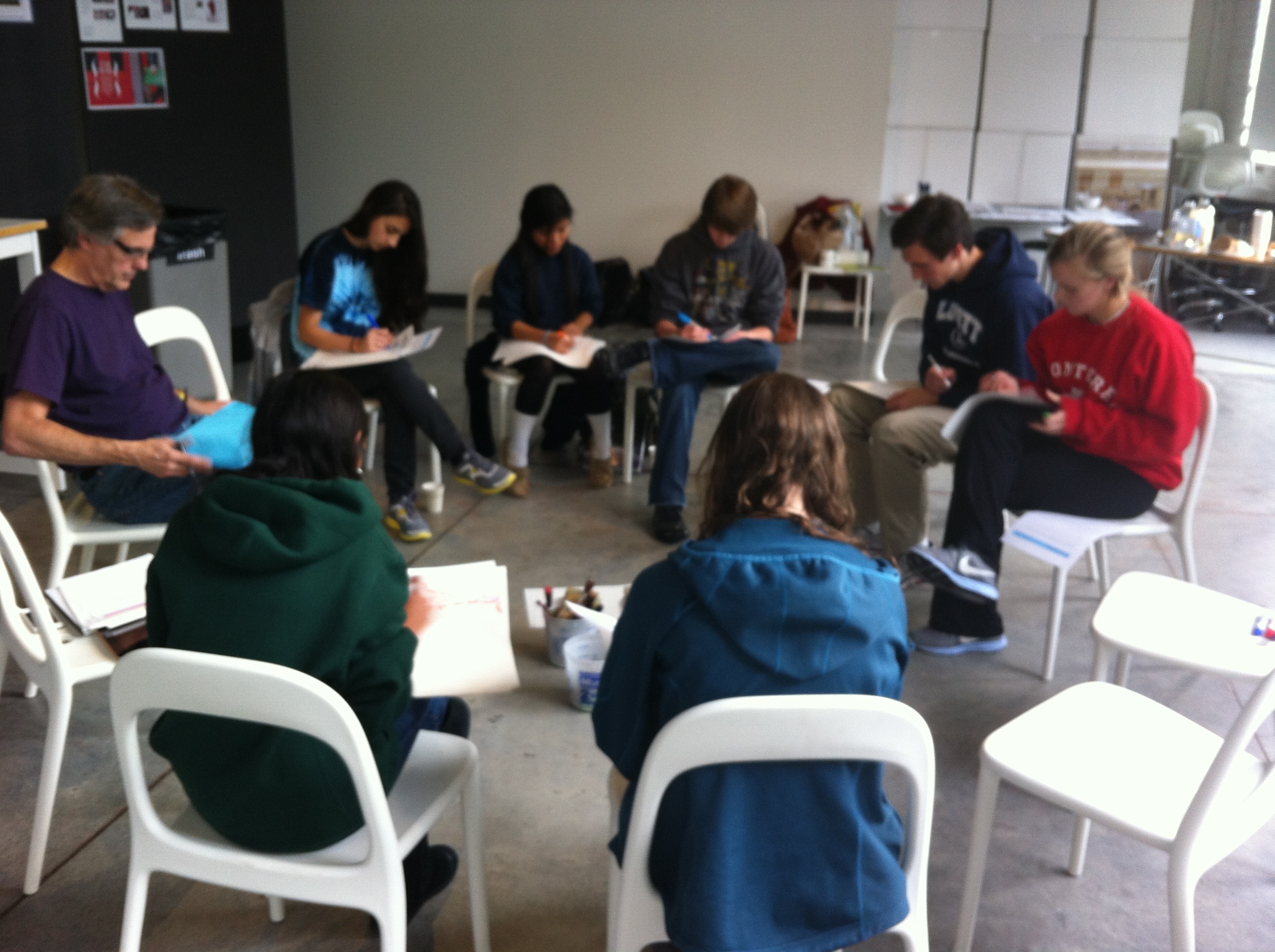
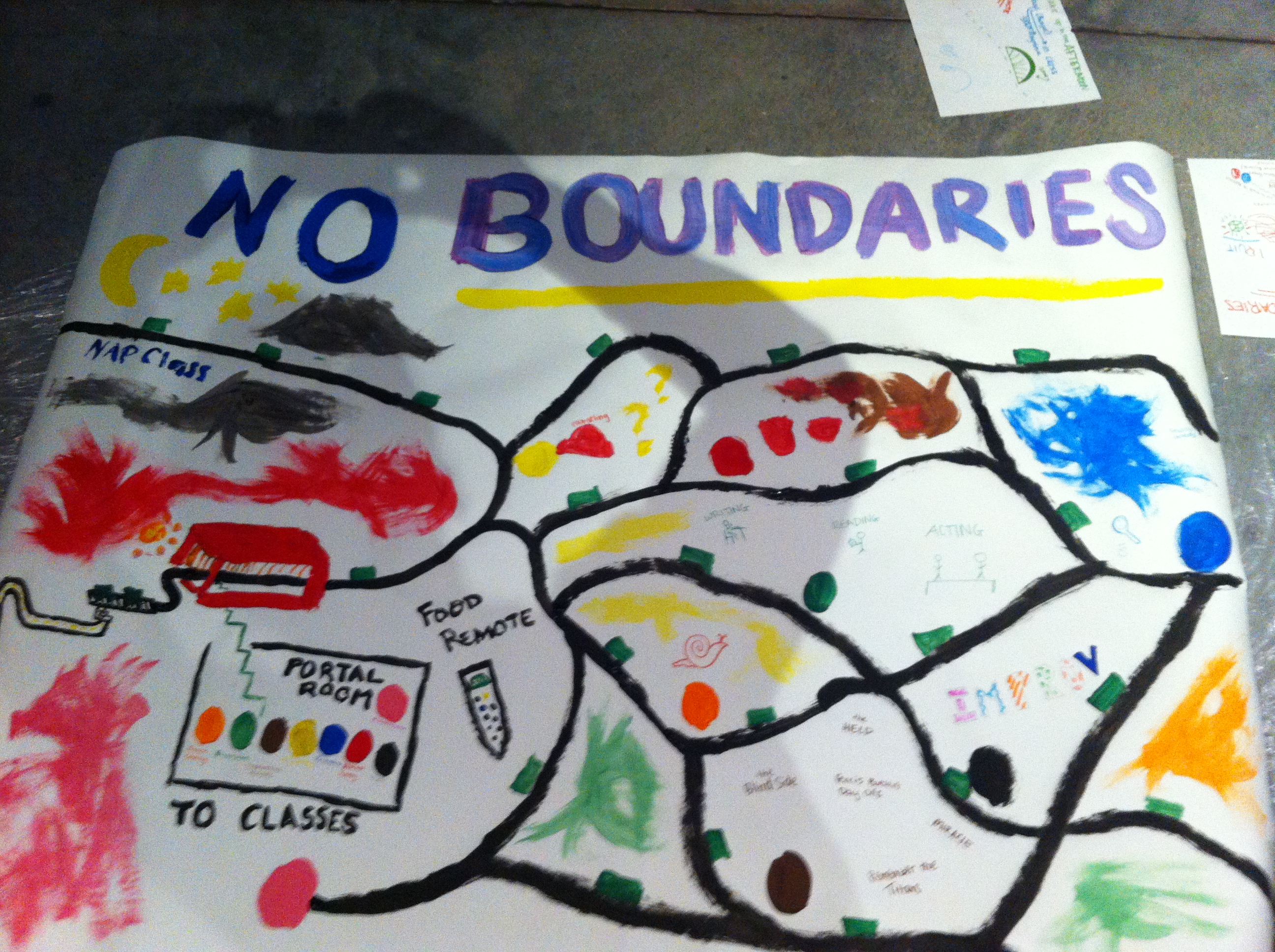
For stage 2, the students wrote and shared a story about a seed of life wisdom that someone else had provided them during their lives. And during stage 3, students co-created a piece of original art to express what they imagined as their ideal learning journey.

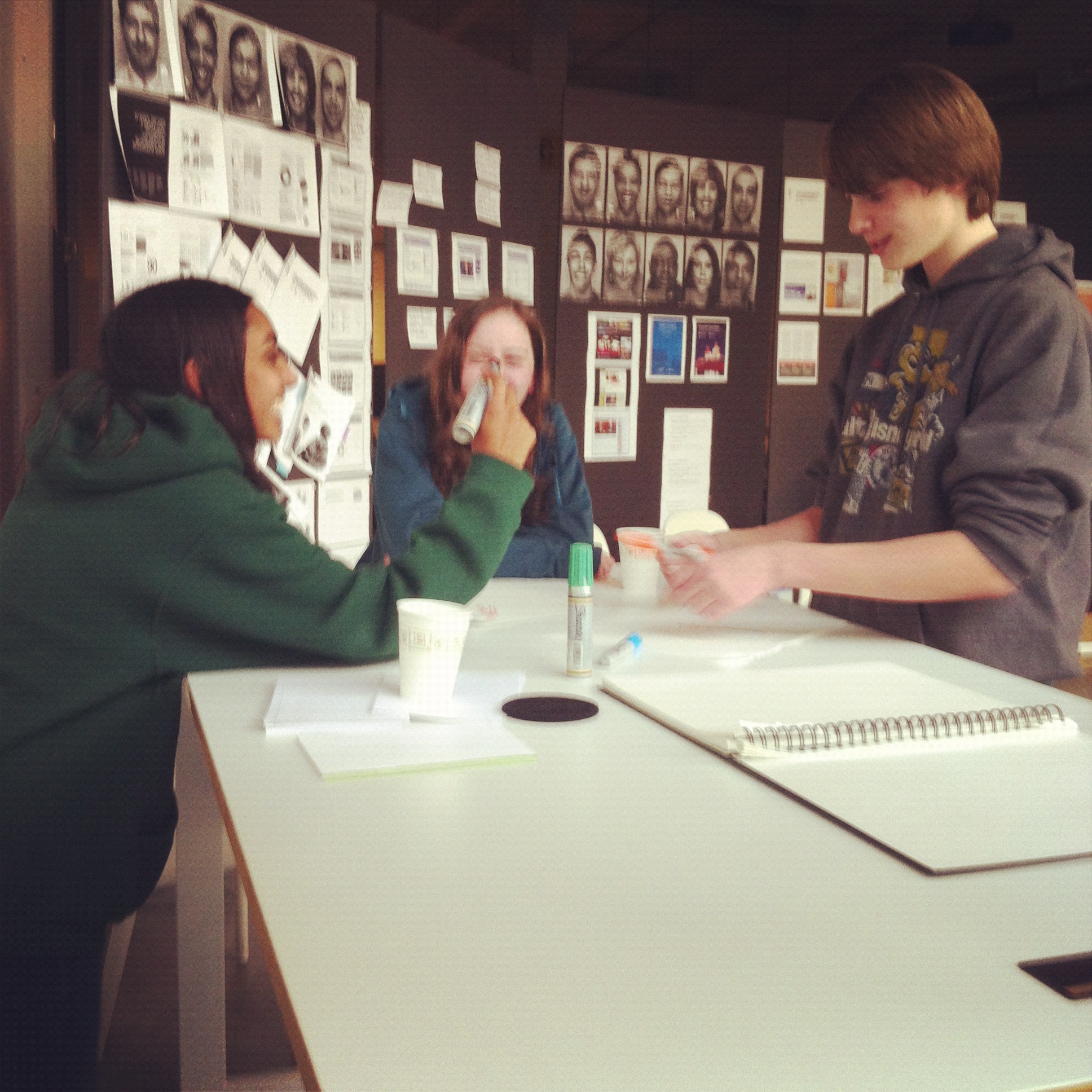
As Charles’ partner Stella recollected at the closing circle of the session, “It was beautiful to watch and listen to you as your participation grew and crescendoed in energy and expression throughout the three hours.”

I assured Charles that I would not give away too much of the content and take-away from this session by way of this post. By traveling the country to listen to young people about what they imagine education could be, Charles and Stella, along with David Loitz, are conducting invaluable research – and to their credit, they are thoughtful and deliberate about how they gather their research. They don’t want sharers like me to overly taint the authenticity of future sessions.

Also of note, they are staying true to a fundamental tenet of design – start with empathy and a genuine desire to understand those for whom you are designing. Seek first to understand and then to be understood.

Combining these seven Atlanta voices with the hundreds of other student voices, Imagining Learning will contribute the collective wisdom of our young people to our national discussion about how to improve and enhance education – how to “educate young people to thrive in a world of possibility.”
As Stella and Charles departed, Charles did say he trusted me about what I would post immediately. And I just could not resist sharing this 60-second piece – hoping that Tara’s efforts and the information here might inspire you to organize a Listening Session yourself.

Many thanks to the seven young people who shared their profound wisdom about what school could be, and many thanks to their five schools who helped make it possible for them to attend and participate. And many thanks to Charles Kouns, Stella Humphries, David Loitz, and to Imagining Learning – for Listening.

If you want to learn more about Imagining Learning and the Listening Sessions, I highly recommend the following:

To Tara, this Atlanta Listening Session cohort, and Imagining Learning. And to all of the invaluable voices of our young people – in both their individual strengths and in their collective power.

Ed Zed Omegas: High School Dropouts Band Together to Learn

Six disenchanted young people have dropped out of high school, hooked up with a guidance counselor, and banded together to study the education issue into which they have plunged. And they are crowd sourcing their learning about the deep dive on high-school alternatives. We can follow along with their blogs, their collective site, their tweets. We can even watch on public television.

Check this out…

And then, be sure to read here

Fascinating!

[Thanks to Chuck Reece for putting me onto Zed Omega.]

Empathy. Listening Sessions. Imagining Learning.

Empathy.

In studying design-thinking in education, I have been seriously educated in the incredible importance of empathy. In embracing PBL, I have been humbled by the essential nature of empathy. Through such endeavors as “student for a day,” I have been reminded to practice empathy as a teacher. As an aspiring change agent for educational leadership and school transformation, I have been taught many lessons about empathy.

Empathy.

I’m embarrassed how little empathy I have shown to current students about possible changes and enhancements in schooling and education. Why haven’t I asked them more about what they think, feel, want, and desire? Am I too busy? Do I think I already know? Do I think “father knows best?” Why haven’t I asked…and listened?

On too many occasions to recall, I have read from Dan and Chip Heath’s book, Switch. The passage I gravitate to most is the chapter about Dr. Jerry Sternin, who was charged years ago to improve the nutrition issue in Vietnam. Does he swoop in and save the day with expert solutions? No, he asks the people of the villages what they do to care for their children – especially if the children are above average in health criteria. He trains a small army of ethnographers and interviewers to go into the villages and seek the wisdom and knowhow of the communal inhabitants. And, then, Dr. Sternin “merely” amplifies what the healthy-child mothers do to enhance the nutrition and wellness of their children.

I’ve read these pages, maybe, over 100 times to audiences, classes, faculties.

I can count on one hand (doesn’t even take me all the fingers of one hand) the number of times that I have emulated Dr. Sternin and asked a collective of students, “How would you design education to fulfill the needs of learners who are growing up in today’s world?”

That’s embarrassing.

I strive to be better than that.

Thanks to a former student of mine (from whom I learn more than she has probably learned from me), I have found Imagining Learning by way of a Cooperative Catalyst post by Charles Kouns.

Imagining Learning is an invitation to participate in a heart-centered exploration of the question, “How do we educate young people to thrive in a world of possibility?”

Our purpose is to work with individuals and communities to co-create a new education system for all children – a new seed if you will – that sees the healthy, internal world of a child as vital to the future of humanity and the planet. Our anchoring question also recognizes that our children’s ability to thrive is directly related to accessing possibility.  Possibility here means every child having access to opportunities for learning that are as diverse and dynamic as the world around them, and having access to inner capacities that enable them to activate these opportunities.

As the primary step, we have invited young people’s voices into the co-creating process.   We have designed a creative process we name Listening Sessions that give young people the opportunity to share, in a safe and nurturing environment, their aspirations and insights on education.  Listening Sessions are designed to tap into the inner wisdom that young people (ages 13 – 19) implicitly hold through a series of appreciative questions, sharing stories and collaborative painting.  The Listening Sessions are short (3 hours) and  allow us to repeat the process easily. We are currently conducting Listening Sessions with groups across America. The Listening Sessions are welcomed whole-heartedly by young people, who consistently express their gratitude for the opportunity to be heard.

– from http://www.imagininglearning.us/#!about/c2308, accessed 8-23-12

I hope you’ll find 5-10 minutes to explore the site. It’s beautiful in design and content, purpose and character. I hope you’ll spread the word and even consider hosting a Listening Session. I hope you’ll ask more students for their thoughts and ideas about schooling and education.

I know I need to. I plan to. Imagine what I could learn! It’s about learning.

I owe a huge debt to TS. Thanks for being my teacher and for reflecting back to me how to be a Dr. Sternin…how to listen…how to practice empathy.

Inspired by Jackson 4th Graders’ Common Sense

Yesterday, someone sent me an email about Warren T. Jackson’s 4th Grade Class led by Ms. Campbell. In part of the email, Ms. Campbell explains,

Earlier this year, my students were inspired by the Apple Education Summit and its introduction of interactive, digital textbooks on the iPad. In class we tied what we learned about this new technology in with American history to produce our persuasive essays titled, Common Sense: 2012,” inspired by Thomas Paine’s original “Common Sense in 1776.

In their writing my students discussed and persuaded why textbooks on the iPad were the inevitable replacement of the paper textbook, and the time is NOW.

Their ideas were so spectacular, Dr. Reich encouraged us to film them. I took it a step further by applying for the PTA “Teaching in Excellence” Grant. We ended up winning and produced it as a professional movie!

I am inspired by Ms. Campbell’s classroom leadership and educational innovation. I am inspired by Dr. Reich’s administration encouragement. I am inspired by the support of the PTA. I am inspired by one of my local, public elementary schools! And I am inspired by those amazing 4th graders. KUDOS to you for what you created and for that which you are advocating! [Watch them at http://www.commonsensekids.org/ to be inspired!]

An integrated, PBL course idea – Past, Present, and Future of USA Schooling

I wonder…

Why don’t we devote more time and attention in school to studying schools? What if there were a course akin to “Past, Present, and Future of USA Schooling?” Could mixed-aged classrooms take on various design challenges for improving schools? Could such design challenges lead to learners studying the present state of schools in the U.S.? Could such a course create a “need to know” about the history of schooling in the U.S.? Could such a course integrate lessons that would typically be relegated and segregated to English, math, language, science, and history?

What might happen to the rate and effectiveness of school change-and-growth if we approached the issue in such a way?

Like ripples in a pond, students could better understand the WHYS and HOWS and WHATS of one’s own school. How does a school decide on curriculum? How does a school educate its own faculty? How does a school business office work? What are the issues that my school faces in terms of sustainability and campus planning?

Then, the next ripple in the pond may be to understand the school landscape in one’s own city and/or state. Schools from various states could collaborate on building a collective understanding of schooling in the U.S. How did charters develop? Why has homeschooling grown so much in the last decade? Imagine the collective database, resources, and growing understanding. Imagine guiding students to employing such scientific methods to the understanding of one’s own school, as well as to schools in more general terms.

From such a foundation, what might the next generation of school leaders achieve?!