-
Chloe Varelidi’s Blog – Legendary Lands And The Design Of Learning Pathways
HT @steelemaley
Legendary Lands and the Design of Learning Pathways via @varelidi http://t.co/QJj1Lhrq6K ht @dajbelshaw cc: @rogre @boadams1 -
http://www.learningstorm.org/wp-content/uploads/2012/09/PSII-curriculum-organizer.pdf
BIG HT @MeghanCureton
-
Engagement and Impact: Design Thinking and the Arts | Edutopia
@boadams1 help…I can’t stop http://t.co/TeAxpUIuK9
-
TED-Ed Blog» Blog Archive » Math behind the movies: An interview with Tony DeRose from Pixar
HT @meghancureton
RT via @TED_ED: One of the top mathematicians at @DisneyPixar talks shop: http://t.co/ojGwA3WdP4 http://t.co/CGAa1lVupr #idploma @boadams1 -
No Courses, No Classrooms, No Grades — Just Learning | MindShift
HT @meghancureton
Another resource for #idiploma http://t.co/0SipjTisBE @boadams1-
The crux of the problem, according to Staton, is that most schools are sticking to core subjects and the bell system, which doesn’t leave much time for exploratory projects.
-
-
Why Daydreaming Isn’t a Waste of Time | MindShift
“parents and teachers expend a lot of energy getting kids to pay attention, concentrate, and focus on the task in front of them. What adults don’t do, according to University of Southern California education professor Mary Helen Immordino-Yang, is teach children the value of the more diffuse mental activity that characterizes our inner lives: daydreaming, remembering, reflecting”
HT @meghancureton
Similar to convo today http://t.co/jyDzWTTl3Y @EmilyBreite @scitechyEDU @mrsacbragg @boadams1 @ChipHouston1976 @TheRealJamCam
Category Archives: #MustRead Shares – Weekly Reading
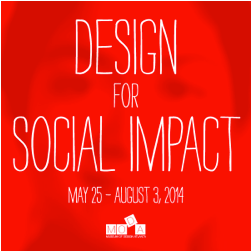
Design for Social Impact…with @modatl
From MODA (@modatl) – Museum of Design AtlantaHelp Us Change the World by Design! Based on the idea that design is a way of looking at the world with an eye for changing it, Design for Social Impact, will offer a look at how designers, engineers, students, professors, architects, and social entrepreneurs are using design to solve the problems of the 21st century. The exhibition will feature projects that address a variety of challenges in the areas of shelter, community, education, healthcare, energy and food & water. Each category will highlight solutions taking place locally, as well as ways in which these challenges are being addressed around the world. Among the local projects highlighted in Design for Social Impact are those of:
We’re raising funds for this exhibition through a crowdfunding site called Uruut! You can help bring Design for Social Impact into being (and get some good perks too!) by making a gift of any size. Demonstrate your belief that design can change the world by supporting this exhibition. Click here for more information! |
#MustRead Shares (weekly)
-
Personalised Learning at HPSS | Steve Mouldey
This is incredible work: HPSS Vision of Personalised Learning http://t.co/x8Vo8JnWXD via @GeoMouldey #fieldnotes cc @boadams1 @MeghanCuretonHT @steelemaleySee iteration 2 post, as well
-
The One Room Schoolhouse Goes High Tech | MindShift
Important new pilot @altschool of differentiated learning? via @Kschwart http://t.co/S5nS0yLmAx @Design39Campus @boadams1HT @grantlichtman
-
HPSS Modules Iteration 2 | Steve Mouldey
@steelemaley @boadams1 @MeghanCureton thanks! This covers the recent iterations made to how the modules are developed http://t.co/o02aOsycUh
@GeoMouldey
-
Want A Better Library At School? These Eighth-Graders Designed Their Own | Co.Exist | ideas + impact
-
All Work, No Play: Why High School Students Should Have Fun – Learning Deeply – Education Week
“What would happen if high school teachers treated these curiosities as assets? If they took seriously the idea that “playing around,” when designed as part of instruction, could help students to engage with academic content in a way that is both joyful and deep?”
HT @akytle
HMW use/treat adolescents’ curiosities as assets? Value of play in US @boadams1 connection to a recent blog post. http://t.co/dgwXWidrEQ-
Current school reform efforts tend to ignore these questions. They bank instead on a model of discrete skill-building that breaks academic tasks into their smallest components. This model helps teachers to hone in on specific standards with razor-like precision, but it does so in a way that leaves little room for open-endedness. It thus reifies a perspective that is closed to the possibilities offered by playful learning, especially when it comes to adolescents.
-
unified by a commitment to giving students opportunities to engage in open-ended work. Such opportunities help them learn to tackle complex problems creatively and flexibly, and to engage deeply while doing so. The classrooms where this kind of learning is happening are joyful and rigorous places to teach and learn – and much more aligned with the real world than most.
-
-
Seth’s Blog: Connecting dots (or collecting dots)
HT @jbrettjacobsen
#MustRead Shares (weekly)
-
Charting the PD Waters With Badges | EdSurge News
HT @TreyBoden
Badging + PD http://t.co/Eya4TjdIbZ cc: @boadams1 -
Why It's Important To Take Risks While Learning – Edudemic
HT Sarah Stewart
Why it’s imp. to take risks while learning from @Edudemic http://t.co/CL9dBFqe6k #learning @boadams1 @spinedu -
The Productive Way to Develop Ideas – Explore Create Repeat – by 4ormat
-
The more often you take on unique problem-solving challenges, the stronger your ability to think creatively becomes.
-
Instead of looking at how an idea fails to achieve its objective, try to use your colleague’s intent to guide another potential solution. Collaboration is easy when you focus on the areas where you agree.
-
-
Micro-Credentials: Empowering Lifelong Learners | Edutopia
HT @MeghanCureton
Via @edutopia Micro-Credentials and the importance of empowering non-traditional learning @boadams1 http://t.co/s0KRtgvo0n #iDiploma -
Getting Our Students to Own Their Educational Experience
“If our interest and motivation are piqued when we work on tasks that interest us, that directly involve us, that have outcomes based on our abilities, and that succeed or fail based on our level of understanding, effort, and involvement, then why not apply this same logic to student learning in our classrooms?”
(HT @nicolenmartin) -
-
There’s a benefit in completing a dissertation, immersing yourself in research, and writing articles for peer-reviewed journals. But there’s also benefit in working daily with students, translating theory into instruction, and choosing teaching as a career.
-
Solution Seekers, TMB Panyee Football Club, HT @MikeyCanup
What if we never said, “It can’t be done?”
#GrowthMindset
#SolutionSeeker
HT @MikeyCanup