-
How the Internet is Shaping Our “Global Brain” – Tiffany Shlain – Harvard Business Review
Business in the 21st century needs more focus on outcomes than outputs. We all can see where focusing on outputs got us: In education we’ve focused on test results (outputs) and ended up with some high-scoring kids who don’t know how to apply what they’ve learned to the world at large (outcome), like how the reasons leading to the American Revolution are similar to those that led to the Arab Spring.
-
Business in the 21st century needs more focus on outcomes than outputs. We all can see where focusing on outputs got us: In education we’ve focused on test results (outputs) and ended up with some high-scoring kids who don’t know how to apply what they’ve learned to the world at large (outcome), like how the reasons leading to the American Revolution are similar to those that led to the Arab Spring.
-
Janine Shepherd: A broken body isn’t a broken person | Video on TED.com
Beautiful talk about choice, attitude, and the spirit to become. Quotes Lao Tzu – “When you give up who you are, you become who you might be.”
-
Fried Technology: What’s the Difference Between “Doing Projects” and “Project Based Learning”?
-
Between the By-Road and the Main Road: The Necessity of Wonder: Rethinking Argument
-
Dr. W. Edwards Deming and Profound Knowledge – Part 1 | BPI Consulting
-
Inscribed upon my wrist: Emphasizing effort to empower learning SmartBlogs
-
My wrist one-liner is a good mantra for our schools: Give the effort. Perhaps we should have it inscribed on student desks or chiseled into classroom walls. Why? Because more than anything else, effort influences learning, and authentic learning involves effort. (In fact, students who rarely struggle are probably learning little!)
-
-
STEM Students Must Be Taught to Fail – US News and World Report
-
Zeitgeist 2012: Connecting the Outer & Inner Worlds
In his talk, Robinson gave us a unique perspective of two distinct worlds in which all humans are members; the outer world and the inner world. Early in his presentation, he observes that our education systems are failing to keep pace with developments in the external world, “which are moving with a tremendous speed and depth of change.” And, he adds, education systems “have never been good at connecting with our inner world.”
-
The End of Education As We Know It | design mind
“Using online media, adventurous educators are engaging students and teachers in fresh ways.” Last paragraph includes a quote from Bloom about power of tutoring. Technology is leading to such scalable possibilities.
-
As he noted in his TEDGlobal talk, Schocken believes that the traditional grading system is “degrading”—and he’d rather talk about a more positive approach to teaching that he calls “upgrading.”
-
“It’s surprising we are still teaching students the same way we [have] for the past 300 years,” Koller said.
-
“The data … can really open up new windows to understanding new learning,” Koller noted.
-
Skeptics may argue that the resources, technical skills, and university networks required to participate in the current education revolution are available only to well-connected computer science professors such as Schocken and Koller. But initiatives are attempting to include teachers of all levels around the world to participate. One such example is TED-Ed, the new educational arm of TED.
-
Way back in 1984, psychologist Benjamin Bloom reported some shocking study results: Students who engaged in individualized tutoring with a teacher scored 98 percent better than the average performance of students in the traditional classroom. This led Bloom to propose his famous “2 Sigma Problem”: How can we accomplish the same results using methods other than peer tutoring, which are “too costly for most societies to bear on a large scale”?
-
-
Groups Make Change: Creating frog’s Collective Action Toolkit | Blog | design mind
I can imagine a school course that uses the CAT as its backbone curriculum.
-
Seth’s Blog: Four questions worth answering
These are provocative questions to consider for the future of educational transformation. A school that can respond powerfully to these questions is on its way to understanding its deeper purpose.
-
Seth’s Blog: The decline of fascination and the rise in ennui
-
Struggle For Smarts? How Eastern And Western Cultures Tackle Learning : Shots – Health News : NPR
-
What’s Your Mental Model Of Innovation? – Forbes
“We owe our existence to innovation,” writes Gary Hamel in his wonderful new book, What Matters Now. “We owe our prosperity to innovation… We owe our happiness to innovation… We owe our future to innovation… Innovation isn’t a fad—it’s the real deal, the only deal. Our future no less than our past depends on innovation.”
-
Is ‘Shared Value’ A New Mental Model For Innovation? – Forbes
In my most recent marks on #MustRead, I am examining the idea of disruptive innovation in schools. The internal links in this sub-collection of Forbes articles contain some rich soil for thinking about the mental models for innovation in education.
-
Why Clayton Christensen Worries About Apple – Forbes
My question: Are schools primarily in a state of sustaining innovation or disruptive innovation? Are schools yet confronting self-disruption?
-
What Killed Michael Porter’s Monitor Group? The One Force That Really Matters – Forbes
if a business [school] is to survive, it must aim to add value to customers through continuous innovation and finding new ways of delighting [empowering-educating] its customers. Experimentation and innovation become an integral part of everything the organization does.
-
Instead of seeing business—and strategy and business education—as a matter of figuring out how to defeat one’s known rivals and protect oneself against competition through structural barriers, if a business is to survive, it must aim to add value to customers through continuous innovation and finding new ways of delighting its customers. Experimentation and innovation become an integral part of everything the organization does.
-
shifted the concept of the bottom line and the very purpose of the firm so that the whole organization focuses on delivering steadily more value to customers through innovation. Thus experimentation and innovation become an integral part of everything the company does. Companies with this mental model have shown a consistent ability to innovate and to disrupt their own businesses with innovation.
-
Is continuous innovation sustainable?
-
they are consistently disrupting others, rather than being disrupted themselves.
-
they are doing a lot better than firms pursuing shareholder value or focusing merely on defeating rivals.
-
Author Archives: boadams1
Book Review: Bringing Innovation to School @SuzieBoss @SolutionTree
There has been an explosion of interest in and writing about innovation. By no means have I read all of the latest works on innovation, but I have read quite a bit – books and articles by Tony Wagner, Clayton Christensen, Steven Johnson, Tom Kelley, and Peter Drucker. Most recently, I have completed my first round of studying the book Bringing Innovation to School: Empowering Students to Thrive in a Changing World, written by Suzie Boss and published by Solution Tree. For those who subscribe to “seeing is believing” and respect storytelling as a vivid means for seeing more clearly how we might innovate schools and prepare our next generation of innovators (Boss, 1), this is a #MustRead.
From the very first line of the introduction, Boss shows us innovation in schooling by telling us real stories. The first tale begins in Bertie County, North Carolina, with Emily Pilloton’s elective-course project called Studio H – “a hand’s on immersion in the design and build process with an emphasis on local problem solving” (1). Having seen Pilloton’s TED talk, “Emily Pilloton: Teaching design for change,” I was immediately warmed and invited in by Boss’s initial fuel and kindling for the book. I knew that Boss was committed to presenting high-quality examples, and I wanted to listen to and engage in more of Boss’s storytelling.
Whereas many books primarily present summarized theory and garnish the conceptual with brief examples pushed to sidebars, Boss treats the real-life stories as the main dishes, and she peppers the well-told tales with summarizing remarks and connections to big-picture innovation strategies. In some ways, Boss flipped the typical book, much like all kinds of educators talk of flipping the classroom. I loved this approach and methodology. Many of her stories involved educators and schools that I follow closely through blogs, Twitter, and the news. Some of her stories involved educational leaders that I have come to regard as friends. A number of her stories were brand new to me. All of her stories – and there are many of them – taught me things I did not yet know, filled in gaps about things I had wondered, and inspired in me an even deeper desire to investigate more robustly and learn more. Boss’s book strikes me as one of those rare finds that I know I will pick up time and time again to find a particular story as I connect its dots to another case I am working on, to review my notes and highlighting as I am making my own meaning about innovation in schools, and to return to a dog-eared page as I am ready to explore in more detail the robust set of resources that Boss accumulated in one place.
In the curation of her book, Boss organized the learning arc in a wonderful manner. “Part I: Setting the Stage,” creates a clear understanding of innovation and makes a compelling case for the critical nature of marrying education and innovation. Throughout “Part II: Building a New Idea Factory,” Boss weaves together her case studies – fabulous stories that balance ideal amounts of individual length and collective insightfulness. She wows the reader with what’s already being done, as well as with what’s possible, in regards to creating space for students to be immersed in and empowered by motivating, exciting work that honors their capacity to make a difference now and grow into the knowers and doers that our world demands. And Suzie Boss means to disrupt our own complacency. As an advanced organizer, she wrote in the section intro, “As we take a closer look at these schools and classrooms in the following case studies, put on your own critical lenses and consider: Which ideas are you ready to borrow now? What seems possible longer term? What feels out of reach in your current situation (and why)? Each case study ends with practical suggestions for how to get started” (51). This is meant to be a book of action. It’s a destination and travel book with images and narratives that make one want to venture out and arrive posthaste. What’s more, “Interspersed with these examples are five Strategy Spotlights to further expand your innovation toolkit” (51). Not only does Boss inspire us to go and do, but she also provides parts of the map to get to those places – enough pieces to help us feel we’ve already started and well on our way. In “Part III: Moving from Thinking to Doing,” Boss reiterates even more directly the importance of sharing ideas and leveraging networks for innovation progress. She also details eight action steps for impacting systems-level innovation. This third of the three sections is the shortest and took me the longest to read – I had trouble deciding what not to highlight, as it was all underlining-worthy.
At the end, Boss provides three appendixes, too: A) additional resources for design thinking, digital gaming, innovation and invention, project-based learning, and social innovation; B) an innovation rubric; and C) a discussion guide that could facilitate endless, powerful reflections and planning for motivated groups of administrators, faculty, parents, and/or students.
In Gary Hamel’s great new book, What Matters Now, he writes, “We owe our existence to innovation. We owe our prosperity to innovation… We owe our happiness to innovation… We owe our future to innovation… Innovation isn’t a fad—it’s the real deal, the only deal. Our future no less than our past depends on innovation.” And in Suzie Boss’s Bringing Innovation to School, she relays a rich repertoire of stories of how we might pay our indebtedness to innovation by investing in it more purposefully and pervasively in our educational system – for our dear children.
P.S. You can also read Suzie Boss’s work on blog sites for Edutopia, Stanford Social Innovation Review, and Huffington Post. I highly recommend her postings. She tweets to @SuzieBoss.
Bo Adams (@boadams1) serves as Director of Educational Innovation at Unboundary, a transformation-design and strategic studio in Atlanta, GA.
___
Boss, Suzie. Bringing Innovation to School: Empowering Students to Thrive in a Changing World. Bloomington: Solution Tree, 2012. Print.
#MustRead Shares (weekly)
-
Kurt Vonnegut, Joe Heller, and a Great Thanksgiving Message – Bob Sutton
Having enough is the best form of wealth.
-
Rethinking Learning: The 21st Century Learner | MacArthur Foundation – YouTube
-
Are Business Schools Clueless or Evil? – Gianpiero Petriglieri – Harvard Business Review
The root of the issue runs deeper than that. Business schools are neither clueless nor evil. They are — like most students that flock to their classrooms — in transition. Overtly working to improve their competence and image and covertly wrestling with questions about identity and purpose. Asking, “what should I do?” as a placeholder for the much harder question, “who am I?”
-
The root of the issue runs deeper than that. Business schools are neither clueless nor evil. They are — like most students that flock to their classrooms — in transition. Overtly working to improve their competence and image and covertly wrestling with questions about identity and purpose. Asking, “what should I do?” as a placeholder for the much harder question, “who am I?”
-
We are more at ease with sharing evidence and dispensing advice than with leading change and assisting growth.”
-
In that we resemble our students, who usually get to leadership positions as a reward for mastery in a technical field — and often struggle until they realize that their role is not just bigger but altogether different, that succeeding will take not more effort but a shift in mindset.
-
Only when they become as good at strengthening purpose and communities as they are at boosting ability and ambition, will business schools fulfill the functions they’re called to play in this global day and hyper-mobile age.
-
Graduating leaders who are true to their heart, tied to their people and at home in the world.
-
-
Guest Lesson | For Authentic Learning, Start With Real Problems – NYTimes.com
-
Homework: It fails our students and undermines American education SmartBlogs
-
Healthier Testing Made Easy: The Idea of Authentic Assessment | Edutopia
-
Kids Online: A new research agenda for understanding social networking forums
-
Are EDU conferences meeting our needs? SmartBlogs
BE the change we want to see in education. Professional conferences should model great methodology…and variety.
-
Without Purpose, Impossible to be Extraordinary — Jim Loehr | Craig Lambert
-
1 | Frog Creates An Open-Source Guide To Design Thinking | Co.Design: business + innovation + design
#MustRead Shares (weekly)
-
John Maeda & The Art of Leadership | design mind
Why @johnmaeda believes the artistic process can transform business: http://t.co/EuZ8YLIN
“How do we educate young people to thrive in a world of possibility?” #ImaginingLearning #ListeningSession @Unboundary
A Listening Session’s purpose is to discover each young person’s deepest knowing about how they would answer the question, “How do we educate young people to thrive in a world of possibility?”
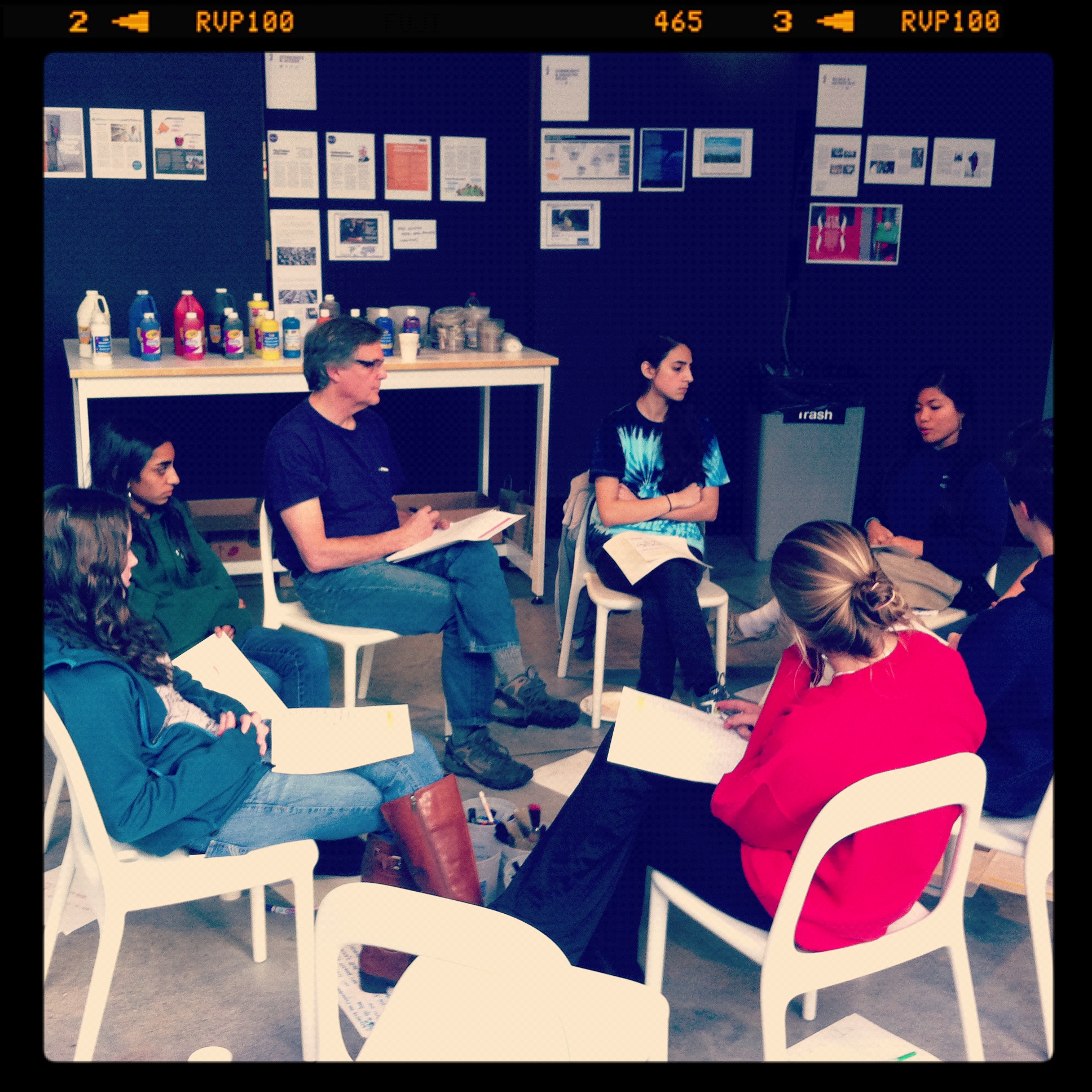
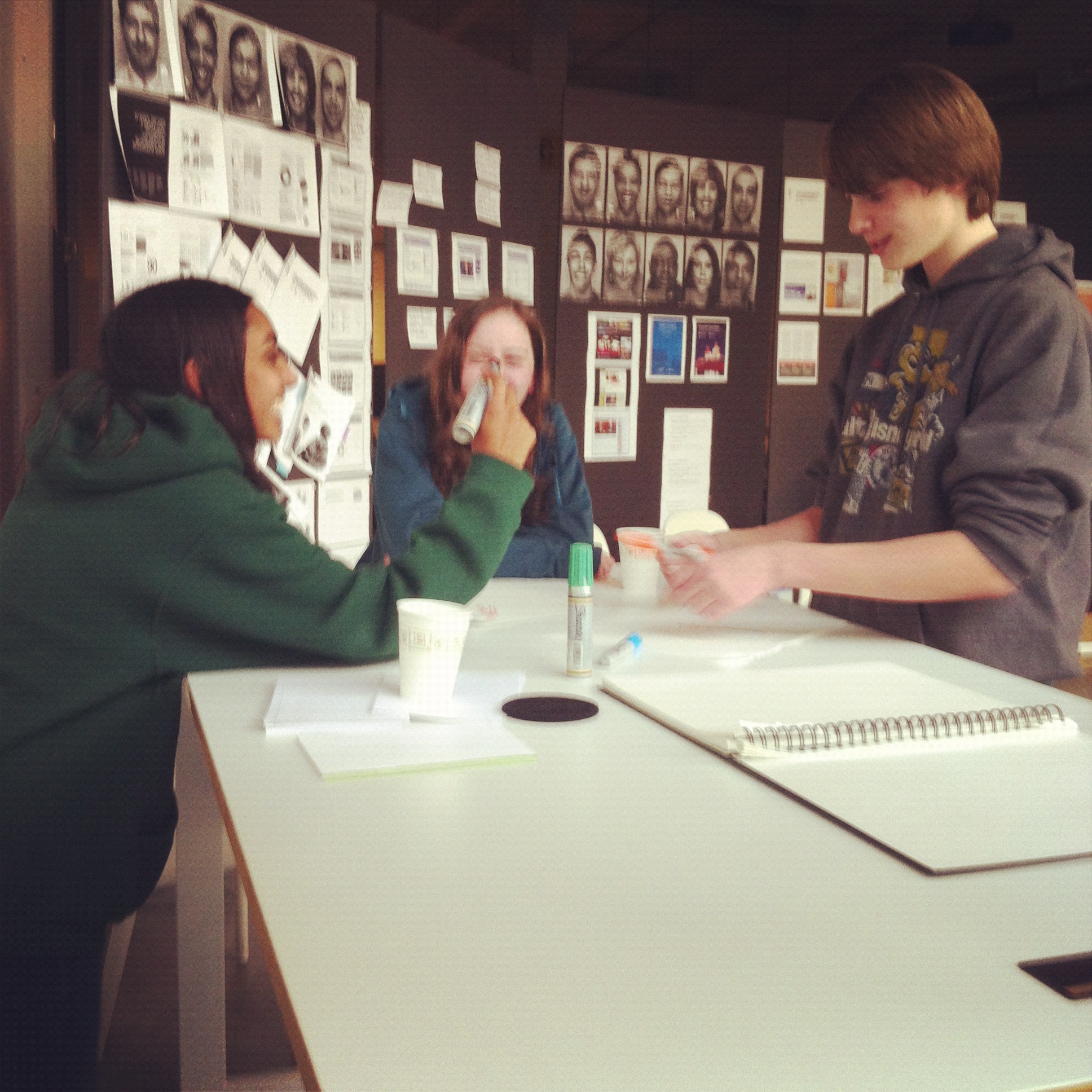
On Thursday, November 15, 2012, Unboundary hosted Charles Kouns and Stella Humphries from Imagining Learning to facilitate a Listening Session for seven Atlanta high schoolers. Sophomore Tara Subramaniam initiated the opportunity with Charles Kouns and asked me to help her organize the event and invite a group of students from surrounding schools. What inspiring vision and determination from Tara.
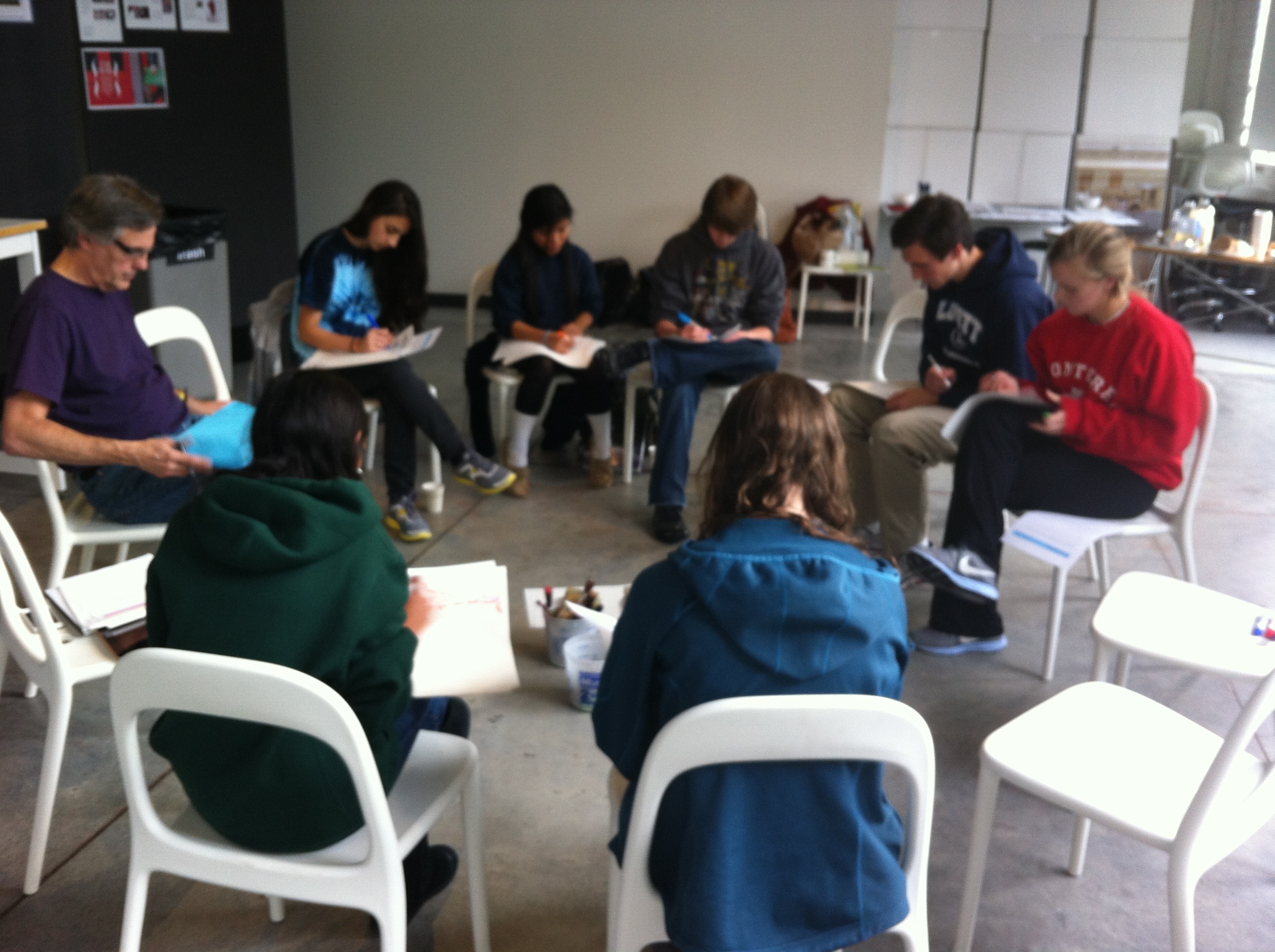
The session unfolded in three stages. In stage 1, Charles explained the purpose of Imagining Learning’s U.S. tour of Listening Sessions, set some general guidelines, and opened the sharing with eight writing prompts to which the students responded.
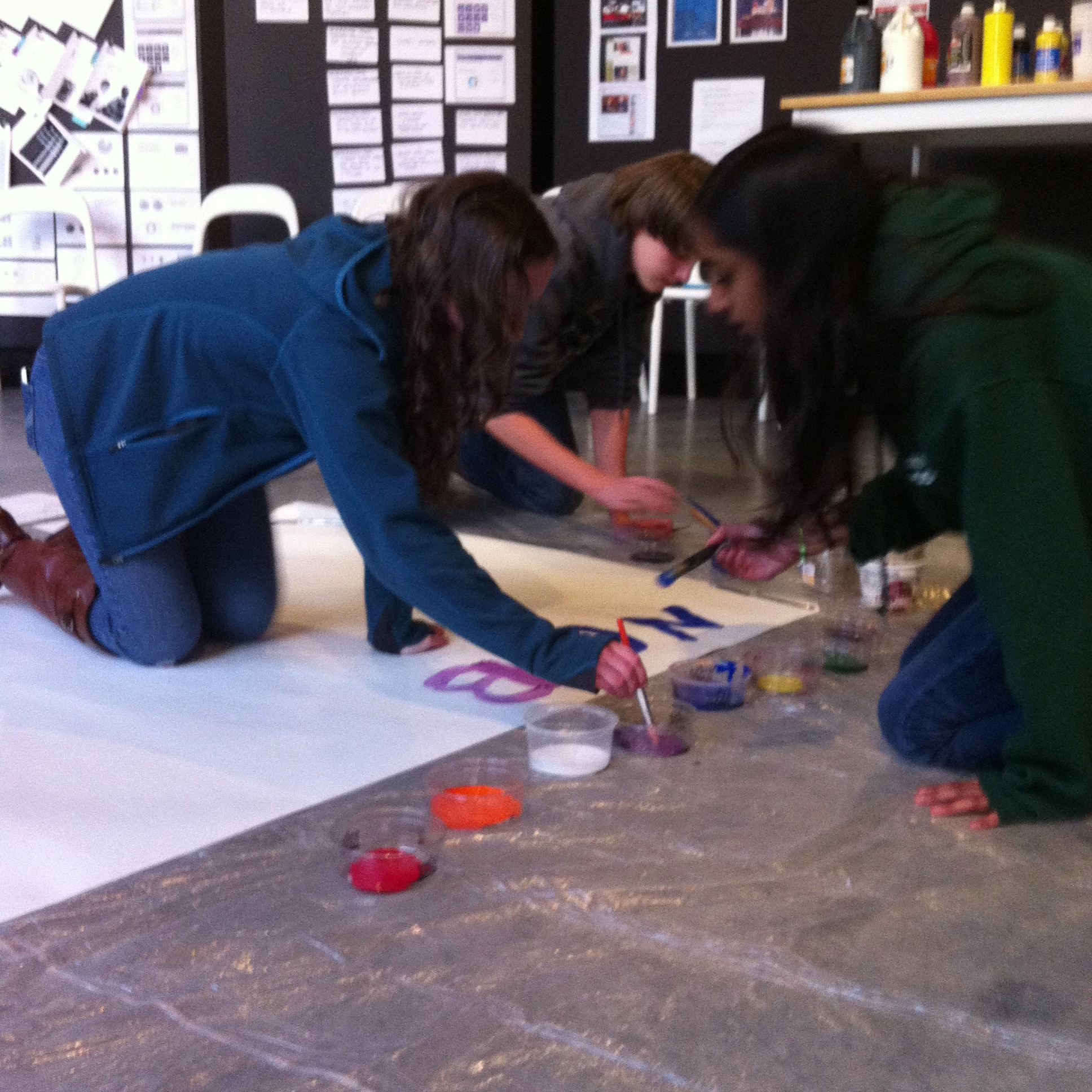
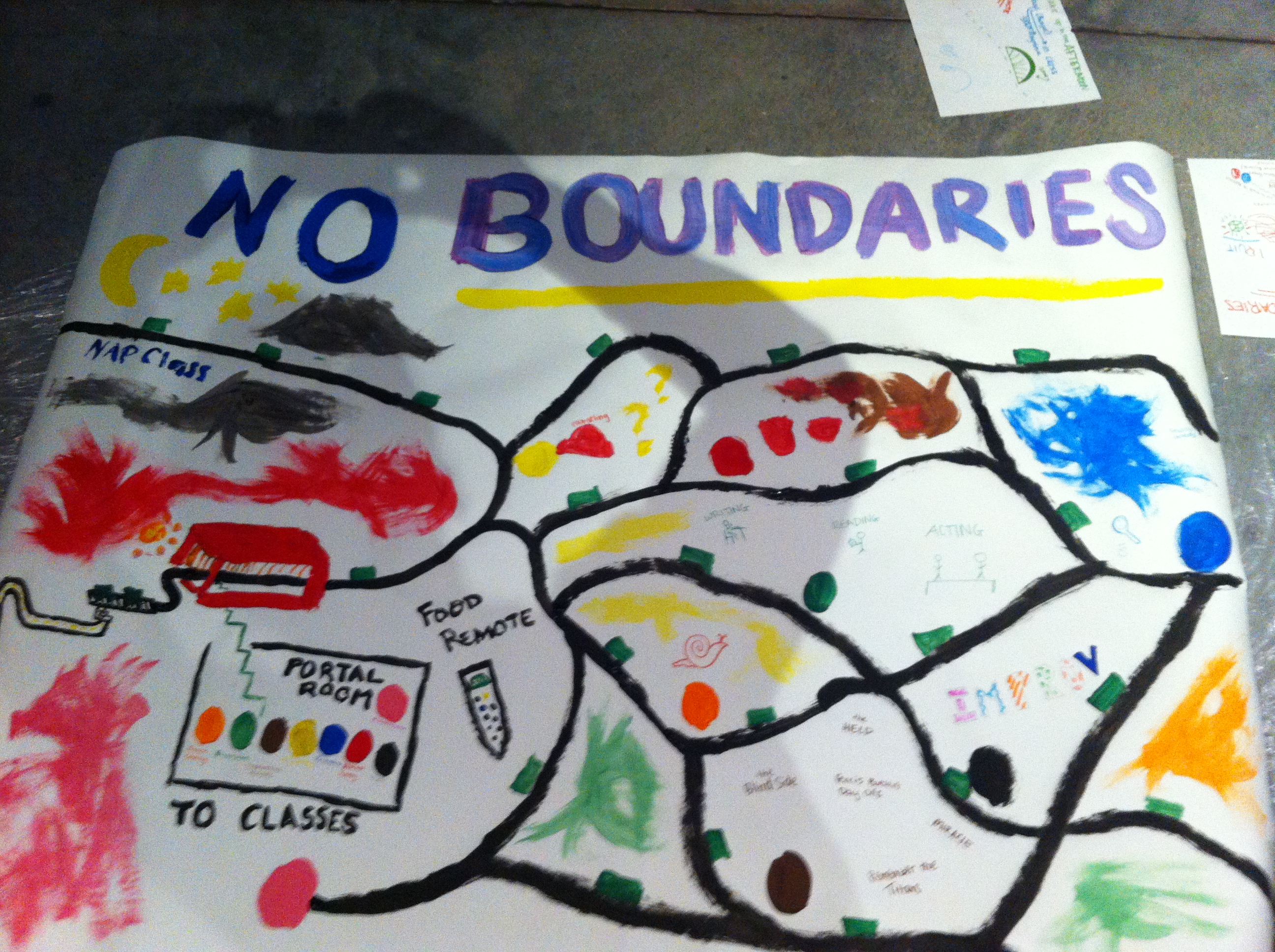
For stage 2, the students wrote and shared a story about a seed of life wisdom that someone else had provided them during their lives. And during stage 3, students co-created a piece of original art to express what they imagined as their ideal learning journey.
As Charles’ partner Stella recollected at the closing circle of the session, “It was beautiful to watch and listen to you as your participation grew and crescendoed in energy and expression throughout the three hours.”
I assured Charles that I would not give away too much of the content and take-away from this session by way of this post. By traveling the country to listen to young people about what they imagine education could be, Charles and Stella, along with David Loitz, are conducting invaluable research – and to their credit, they are thoughtful and deliberate about how they gather their research. They don’t want sharers like me to overly taint the authenticity of future sessions.
Also of note, they are staying true to a fundamental tenet of design – start with empathy and a genuine desire to understand those for whom you are designing. Seek first to understand and then to be understood.
Combining these seven Atlanta voices with the hundreds of other student voices, Imagining Learning will contribute the collective wisdom of our young people to our national discussion about how to improve and enhance education – how to “educate young people to thrive in a world of possibility.”
As Stella and Charles departed, Charles did say he trusted me about what I would post immediately. And I just could not resist sharing this 60-second piece – hoping that Tara’s efforts and the information here might inspire you to organize a Listening Session yourself.
Many thanks to the seven young people who shared their profound wisdom about what school could be, and many thanks to their five schools who helped make it possible for them to attend and participate. And many thanks to Charles Kouns, Stella Humphries, David Loitz, and to Imagining Learning – for Listening.
If you want to learn more about Imagining Learning and the Listening Sessions, I highly recommend the following:
- Imagining Learning’s Website
- Imagining Learning on Facebook
- Charles Kouns’ TEDxKatuah talk: “Listening for the wisdom of young people”
- “Empathy. Listening Sessions. Imagining Learning.” (previous post on It’s About Learning)
To Tara, this Atlanta Listening Session cohort, and Imagining Learning. And to all of the invaluable voices of our young people – in both their individual strengths and in their collective power.